Tuesday, December 1, 2015

Introducing Duct Tape Publishing

Introducing Duct Tape Publishing written by John Jantsch read more at Duct Tape Marketing

Duct Tape PublishingOver the years I’ve produced a lot of content – maybe you know that.

In fact, I’ve written four full-length books and posted over 3,000 blog posts in the last ten years or so.

Today I’m entering the content game in a slightly different way – publishing.

My plan is to use my platform to help some great writers express their point of view through Duct Tape Publishing.

Initially, I am helping members of the Duct Tape Marketing Consultant Network publish and promote print books and ebooks, but may expand to other avenues. (The site is definitely a work in progress!)

You can find books on various marketing topics including referrals, leadership, and lead generation

I invite you to take a look at the collected works of the Duct Tape Network.

In the coming weeks, we will be introducing the first in a series of Guides written by network members Phil Singleton and Ray Perry. The first guide is on Local SEO and you can expect a new entry in the series every month.

local seoIn the book “Local SEO: Proven Strategies & Tips for Better Local Google Ranking,” you will find the essential elements of a successful Local SEO strategy. Plus, you will discover ways to put social media marketing to work in support of your Local SEO efforts. Every aspect of a Local SEO strategy comes together in an effort to feed your business’s vital information to Google, which then sends consumers to you. Local SEO is an easy and reliable inbound marketing method for businesses of all sizes, in any location.

As you read the book and follow the steps outlined in each chapter, you will see your new Local SEO strategy begin to take shape. Every section builds upon the previous one and results in a complete Local SEO optimization plan that any business can successfully implement. It’s the perfect way to bring scores of new local clients to your company.

In the book, you’ll discover:
• What Local SEO is
• Why implementing it is so important to your company’s endurance
• What makes Local SEO more important that global SEO
• What role Google plays in your Local SEO strategy’s success
• How social media platforms can support your Local SEO strategy
• What you can do with your website content to make it more Local SEO-friendly

8 Fascinating Studies Every Entrepreneur Should Know

There’s one thing that every entrepreneur must understand to truly grow a successful business.

That one thing is human behavior.

Understanding human behavior will help you become more effective at marketing, sales, productivity, copywriting, and even product development.

And there’s no better way to develop an understanding of human behavior than through research.

Researchers have been conducting studies to understand why we behave the way we do for decades, which is great news for entrepreneurs. Research studies can help us understand our markets to better position and price our products, increase our sales, and communicate to consumers.

Here are eight studies every entrepreneur should know to become far more effective in your business.

1. The Illogical Reasoning Study

You know that saying “it’s not what you say, it’s how you say it?”

It turns out that this isn’t just an over-used quote; it’s actually true.
A study done by Ellen Langer from Harvard University had subjects ask people lined up at a photocopier whether they could cut in front of them in a line to make their own copies.

That’s where the “how you say it” part comes in: the message with all three test groups was the same. The subject wanted to cut ahead of them.

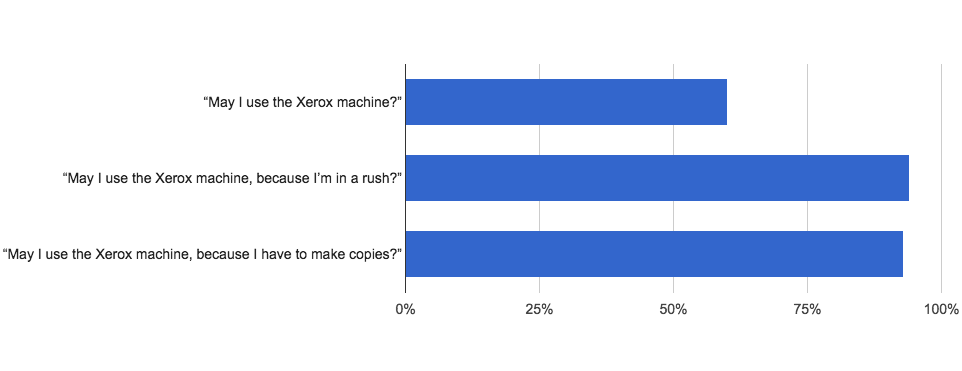
However, in one group, the subject asked to cut ahead without a reason, simply asking if they could make copies by saying “may I use the Xerox machine?” They were only given permission to cut ahead in 60% of these cases.

In the second group, the subject said: “May I use the Xerox machine, because I’m in a rush?” This was far more successful than the first group with 94% allowance.

The third group, however, also gave a “reason”, although the reason made no sense. They said, “may I use the Xerox machine, because I have to make copies?” Even though everybody standing in line also had to make copies, 93% of people let the researcher jump ahead.

xerox-study-results

This demonstrates that people are far more likely to follow through with a request if there seems to be a reason for the requester to make it – even if the reason makes no sense. This study proved that we have blind spots when somebody uses the word “because” to make a case for something they want us to do.

Lessons for Entrepreneurs

As an entrepreneur, the results of this study will help you craft more effective sales copy, marketing content and messaging around your brand. Don’t underestimate the power of a simple word!

2. The Reciprocity Study

Over the past couple of years “content marketing” has become a buzzword.

That’s because content marketing works so well in today’s information era, where advertisements are being replaced with giving away valuable information for free.

But have you ever wondered why content marketing is so effective?

It’s because content marketing – or adding real value to people’s lives, even for free, through publishing audio, visual, video, or written content – activates our reciprocity gene.

As humans, we are strongly driven to reciprocate favors or gifts. This is demonstrated in Robert Cialdini’s book Influence: The Psychology of Persuasion.

Cialdini describes a study done by Phillip Kunz from Brigham Young University. Kunz sent out 600 handwritten Christmas cards to complete strangers to see what would happen, and over the next few weeks received over 200 back.

This is astonishing, considering Kunz was a stranger to the recipients of his cards; they were acting upon the societal norm of reciprocating when somebody gives us something – even somebody we don’t know giving us something as small as a Christmas card.

Lessons for Entrepreneurs

As an entrepreneur, you may be wondering how this study will help you. But maybe you should be wondering how you can help your target market. After all, if you give them something, they’re likely to reciprocate – and sometimes, they’ll do so by buying from you.

3. The Mimicry Study

Have you ever heard the advice to use the exact words that your market uses in your sales copy?

That’s because when we hear words we use (or think), it resonates with us. If we can create sales messages in the language our target market uses, they assume we know the problem better than they do.

Jay Abraham said: “If you can define the problem better than your target customer, they will automatically assume you have the solution.”

A study done by Rick Van Baaren in the Netherlands demonstrates this in action. He had servers in a restaurant take two approaches to confirming an order.

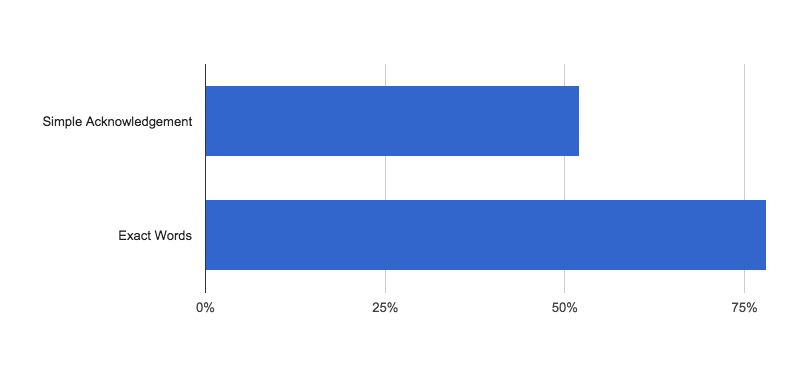
Some servers would indicate that they’d heard the customer’s orders with a simple acknowledgement, and some would repeat the order in the customer’s exact words back to them. Those who mimicked the exact words of the customer saw a 20+% increase in those who tipped, from 52% to 78%.

mimicry-study-results

Lessons for Entrepreneurs

As an entrepreneur, you should be aware of this study because it will help you resonate with their target market. If you can use the exact words and phrasing that your market is thinking or using in your copy, the odds will be tipped in your favor.

4. The Mere Exposure Effect Study

As much as we prefer to think that we like new and novel things, the truth is we have a strong preference for the familiar.

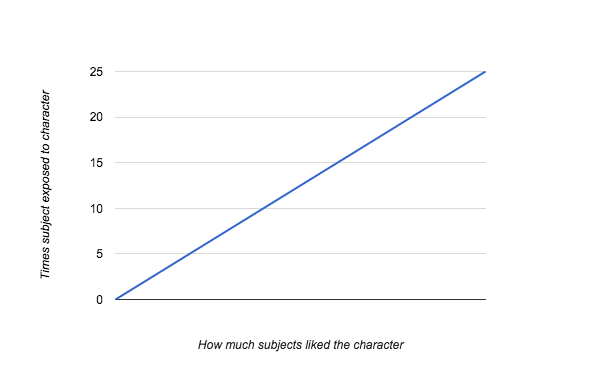
Studies have shown that people look favorably upon something they’re familiar with. In one study, psychologist Robert Zajonc showed participants a character that appeared to be Chinese (but was actually just an arbitrary design). Those who were frequently shown specific characters reacted more positively to the character; the higher the frequency of the people seeing the same symbol, the more the person liked them.

mere-exposure-effect-study

Lessons for Entrepreneurs

As an entrepreneur, the mere exposure effect study can help you with your marketing plan as it helps you understand the buying patterns of the market.

You may have heard that people need to see an advertisement on average seven times before buying; while this would depend on your industry and product, this study goes to show that once is not enough exposure for your market.

5. The Foot in the Door Study

Did you know that if you can get somebody to say “yes” to a small request, you have a far better chance of getting them to comply with a bigger request later on?

This is why sales funnels work.

Stanford researchers Jonathan Freedman and Scott Fraser prove this in a study done in the 1960s. They contacted housewives who were divided into groups. One group was contacted with a small request and then later contacted with a much larger request. The second group was contacted with just the large request.

The first group was 30% more likely than the second to say “yes” to the larger request, as they’d already complied with the smaller request.

foot-in-the-door-study-results

Lessons for Entrepreneurs

Many marketers believe that this is one way to program behavior of consumers to get used to taking one specific action with your brand. Create small opportunities for your customers to say “yes” to lead to larger requests later.

6. The Choice Study

Variety is the spice of life, right?

While that is certainly true in some cases, too much variety may be hurting sales.

An infamous study done by two researchers from Stanford and Columbia Universities respectively demonstrates that while consumers are more interested by having many choices, they’re less decisive and likely to purchase when given many choices.

The two researchers set off to a food store to create a sample display of jams. Coupons were offered to the customers who stopped to sample the jam.

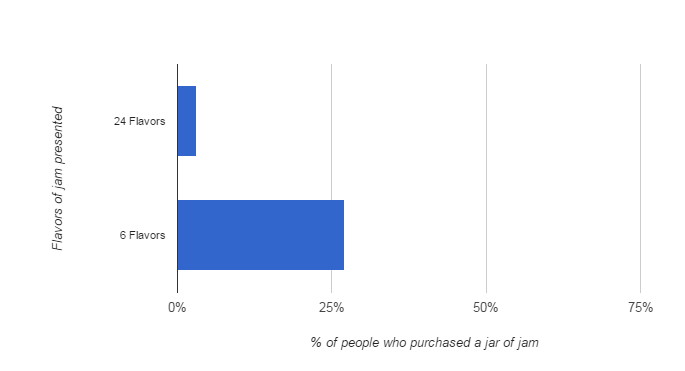
In one part of the study, six flavors of jam were displayed. In another part, twenty-four flavors of jam were displayed.

What they found was that no matter how many jams were on display, the same number of jams were sampled, but 27% more customers actually purchased some jam if they only had to choose between six flavors rather than twenty-four.

choice-study-results

Lessons for Entrepreneurs

You can use this information in your business to increase your sales. Take a look at your product offerings; are you offering too many choices? Remember, offering too many seems interesting to customers but it doesn’t convert to sales.

7. The Decoy Effect Study

Let’s say your business offered two products, and your preference is to sell more of one of them. How could you increase the sales for that one product?

Maybe you’d advertise it more, lower the price or offer a bonus for those who purchase it. But have you ever considered introducing a third, less desirable product to increase your sales of the one?

As outlandish as it seems, this can work, and is called the decoy effect.

This study was conducted by Itamar Simonson, a popular researcher in this field.

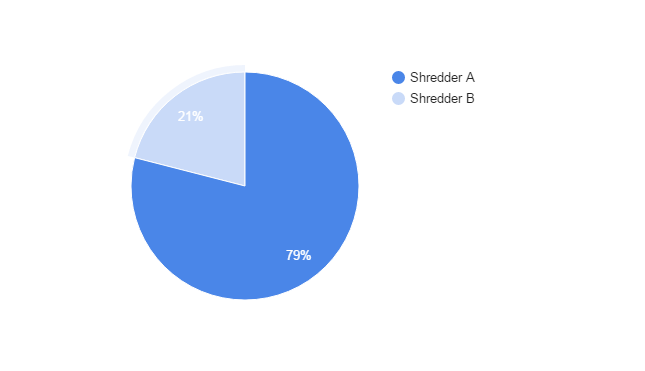
95 shoppers were initially asked to choose between two paper shredders. The first shredder (A) was the cheaper and less efficient model. The second shredder (B) was both more expensive and efficient. In this case, 79% of the shoppers selected the first shredder (the cheaper, less efficient).

decoy-effect-study-1

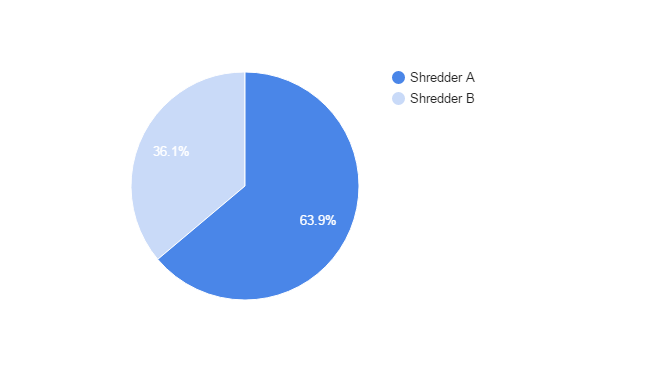
However, the researchers then added a third option (C). This option was the middle of the line for efficiency but the top of the line for price; it was more expensive than A and B but more efficient than A and less efficient than B.

Though the introduction of option C didn’t change the other two options, 74% more participants chose option B.

decoy-effect-study-2

Lessons for Entrepreneurs

This study demonstrates how our decisions change depending on the options we have available. You can use this in your business to offer “decoys” if you want to increase your sales of a specific product.

8. The Virality Study

How amazing would it be for a flood of traffic, followers, and sales to all of a sudden hit your business?

If you’ve ever wanted a piece of your content to go viral, this study will be useful.

Jonah Berger, best selling author, conducted a study that proved that things that elicit certain emotions are far more likely to be shared.

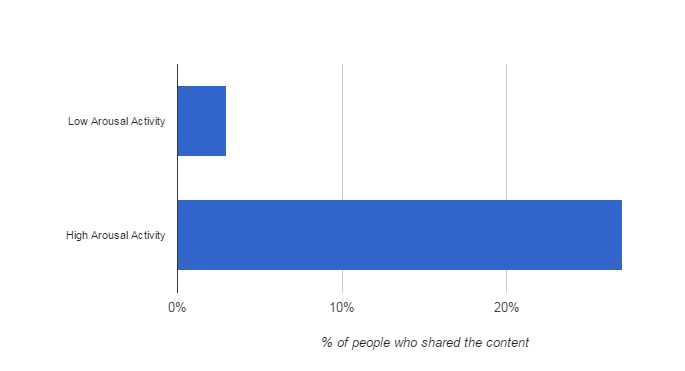
The study elicited both “high arousal” and “low arousal” from participants by having them jog on the spot (a high arousal activity) and watching emotional videos (a high arousal activity), and then asked if they were more or less likely to share the video or content with their friends.

It turns out that high-arousal activities (emotion, physical activity) increased the likelihood that the individuals would share the content by over 50%.

arousal-virality-study

Lessons for Entrepreneurs

When crafting content for your business, ensure it elicits emotion from your audience (or that they’re at the gym when they consume it!).

Conclusion

If you understand the implications of these studies on your business, you’re farther ahead than most people in understanding human behavior – and therefore, the behavior of your market.

Application of these eight studies will not only help you earn more revenue through your business, but also save you and your team the time and effort of trying things that won’t work.

About the Author: Nathan Chan is the Publisher and CEO of Foundr magazine. He is extremely passionate about entrepreneurship and has interviewed some of the most successful entrepreneurs on the planet today (Richard Branson, etc). He shares all of these interviews at www.foundrmag.com.

The 10 Capabilities CMOs Look for When it Comes to Creating a Modern Marketing Organization

A few weeks ago in London during Modern Marketing Experience Europe, we released some new research. Created in partnership with The CMO Club and penned by John Ellett, CEO, nFusion, the paper entitled The CMO Solution Guide For Building A Modern Marketing Organization looked to shed light on the proverbial trials and tribulations CMOs and marketing leaders the world over go through when it comes to building a modern marketing organization.

As part of the research we interviewed over 20 marketing leaders of some of the biggest brands in the world. As part of the overall research we uncovered the following 10 capabilities that CMOs pay the most attention to when it comes modernizing their operations.

1. Customer Insights

There is an increasing desire among CMOs to use documented customer decision journeys as foundational planning tools for marketing. Customer insights specialists must become adept at mining data, asking consumers new questions and seeing patterns of behavior that inform the development of the CDJ maps.

2. Digital Marketing

Creating digital experiences is now a central part of any marketing plan. This has shifted the need for digital marketing expertise to be contained in a center of excellence (COE) to having digital expertise ingrained in the skills portfolios of line marketing and brand managers.

3. Social Media

The unprecedented popularity of social media platforms such as Facebook, LinkedIn, Twitter, Instagram and Pinterest over the past five years has had a significant impact on the marketing plans of most companies. As with other digital marketing activities mentioned above, there is a need to build the acumen for leveraging social media platforms within the broader marketing organization.

4. Integrated Engagement Planning

Creating seamless experiences for customers across all touch points has become an increasing challenge for marketers, as has developing plans that effectively incorporate emerging digital, social and data-driven capabilities. Brand managers at consumer packaged goods (CPG) companies who were well schooled in television-centered advertising need to broaden their expertise, and skill-enhancing initiatives are underway at many of those companies. Other organizations that have managed their marketing communications activities through siloed departments are beginning to structure new roles for integrated planning.

5. Content Development

Marketers are learning that content that consumers and business decision makers find interesting, relevant or entertaining will be engaged with and shared more frequently than general messages broadcast at them. This has led to the rapid growth of content marketing and the investment in content creators.

6. Evaluative Analytics

All CMOs want to get a better handle on how their investments are performing. By having marketing analysts in an independent marketing operations function, rare data science competencies can be leveraged across multiple brands and business units. These analysts can also bring a degree of autonomy from the program managers who have a vested interest making their activities look as good as possible.

7. Predictive Analytics

Progressive marketers are not only using data to evaluate the past but to predict the future, to direct their actions and resources where they can have the biggest impact. Common scenarios include predicting those customers who are at risk of churning, identifying customers who are most likely to respond to a new product or a special offer and identifying which happy customers may be open to becoming vocal advocates.

8. Customer Data Management

In order to deliver personalized customer experiences that are synchronized across touch points, it is essential that all relevant information about a customer is connected and available for use in real time. Bringing all the appropriate data together securely while protecting privacy rights can be a major undertaking. It requires funding that spans business units, marketing and IT.

9. Marketing Technology Planning & Implementation

CMOs realize that they can’t simply wait for their IT partners to show up with a crystal ball and divine a solution. This has led to the appointment of a chief digital officer, a chief marketing technology officer or a director of marketing operations to lead martech planning and to work in collaboration with the company’s IT organization to implement new tools.

10. Innovation Planning

CMOs are finding they must dedicate talent to focus on “what’s next.” Marketing must also innovate at the executional level. This requires new methods for testing and learning, experimenting without fear of failure and adopting agile prototyping methodologies.

The bottom line in all of this and why this research is so valuable to CMOs is pressure from the board to deliver business results is mounting. Technology adoption by consumers is accelerating changes in their buying behavior and dramatically increasing their desire for more personalized experiences.

Download The CMO Solution Guide For Building A Modern Marketing Organization to learn from those just like you who are dealing with the same pressures you are.

Get Something In Their Hands

Jpeg If you procrastinate because you’re waiting for something to be perfect, you’re missing an amazing opportunity.

Everything I create, I do at least twice. I publish projects all the time that are good, but maybe something doesn’t work the way I thought it would when it’s in the hands of others. People know me by now and they say, “Hey, this doesn’t make sense.” Next thing you know, there’s a better version of the product available for them (and everyone who now benefits from that person’s suggestion).

Continue Reading

The post Get Something In Their Hands appeared first on chrisbrogan.com.

Monday, November 30, 2015

4 B2B Social Media Marketing Lessons Marketers Can Learn From Their B2C Counterparts

b2b-social-media-marketing

When social media first launched, many companies were skeptical that these new platforms could be used to support their business initiatives. Today, if you hear of a company that is not on social media, you find yourself wondering “What are they thinking?”.

According to NewsCred, 87% of B2B marketers use social media to distribute content. However, many B2B brands are still trailing behind their B2C counterparts when it comes to social media strategy and results.

There is no denying that social media can be used to build brand affinity and increase engagement for B2B companies. Below are a few lessons and examples that B2B companies can learn from successful B2C companies to increase their “likeability” on social networks. You’ll also find a few B2B companies that are already proving it’s possible.

#1 – Highlight Customers & Community

Because of the loyalty that is often built with consumer products, B2C brands have a lot of opportunities to feature their customers or online community. Featuring different people outside of the organization is a fantastic way to better connect your audience with the content shared on social media channels.

GoPro has done a fantastic job of featuring different people within their community regularly on their Instagram account. It can be everything from a smiling baby, to someone using their GoPro to show off their skateboard moves like the image below.

GoPro Instagram

A B2B brand that is also incorporating their community is MailChimp. Along with some of the best brand visuals I’ve ever seen, MailChimp highlights individuals in a super creative way that anyone that is following them can appreciate.

mailchimp Instagram

#2 – Support Content Marketing Initiatives

As the largest professional social network, LinkedIn provides many opportunities for B2C and B2B companies alike.

Starbucks is a B2C company with a great LinkedIn feed. Instead of simply sharing a product list or their latest news, they’re creating video content that their audience will find interesting. This post for example provides a sneak peek into how Starbuck’s locations transform for the holidays.

Starbucks LinkedIn

HubSpot is well-known within the online community as a marketing automation tool that businesses can use to create more meaningful interactions with potential customers. However, HubSpot provides some of the most useful content I’ve ever uncovered and does a great job of showcasing that content in an enticing and clever way on their LinkedIn page.

HubSpot LinkedIn

#3 – Show The Human Side of Your Company

Many B2B companies have built their business around process, technology and reliability. However, that direction often cuts out one of the most important elements of a company, the people that are a part of the experience.

Love or hate them, BuzzFeed constantly features their employees in different videos and articles. One of their staff members, Matt Bellassai also has a popular weekly video series that is so good, he’s been nominated for a people’s choice award.

Buzzfeed Facebook

B2B companies have equal opportunity to feature stories about their staff. Salesforce has taken a simpler approach and recently shared a post showcasing some of their employee’s giving back during the holiday season.

Salesforce Facebook

#4 – Create Anticipation

When you have a new release or something exciting to share with your customers, it’s a great idea to publish teasers on social media that create anticipation. This can help keep people glued to your feed waiting to see what happens next.

Royal Dutch Airlines created a series of teasers and videos that featured the “unboxing” of their brand new Boeing 787 Dreamliner. Were they talking about ticket prices? No. However, they were creating an experience to connect their audience to the content.

KLM Twitter

Creativity and building anticipation around an event or unveiling isn’t relegated only to B2C companies. Adobe is currently running what they call a “binge-worthy” docu series where three teams are competing to create a holiday campaign. Adobe published teasers leading up to the launch of the series and is frequently providing status updates and encouraging their audience to catch up on the latest episode.

Adobe Twitter

Bonus: Invest in Targeted Social Media Advertising

One challenge that B2B marketers experience (unlike their B2C counterparts) is that there are often multiple decision makers, at different stages within the purchasing cycle.

If you aren’t already, test creating separate ad campaigns for each of the audiences that you want to attract and engage on social networks and then target appropriately based on their common characteristics.

Can You Spot the Similarities?

Did you notice something similar about all of these examples? No matter which social network both these B2C and B2B companies are using, they’re including great visuals alongside engaging content.

This post just scratches the surface of what is required for a truly successful social media strategy. But what it does highlight is that one of the most important things a B2B company can do is treat their audience in a way that highlights their needs and interests as people, not just as potential buyers.

If you’re ready to take your social media game to the next level, see if TopRank Marketing’s Social Media Marketing services are a good fit for your organization.

Header image via Shutterstock


Email Newsletter Gain a competitive advantage by subscribing to the
TopRank® Online Marketing Newsletter.

© Online Marketing Blog - TopRank®, 2015. | 4 B2B Social Media Marketing Lessons Marketers Can Learn From Their B2C Counterparts | http://www.toprankblog.com

The post 4 B2B Social Media Marketing Lessons Marketers Can Learn From Their B2C Counterparts appeared first on Online Marketing Blog - TopRank®.