Wednesday, March 2, 2016

A Step-by-Step Guide to Protecting Yourself Against Negative SEO

negative seo


You’re checking the backlinks pointing to your site, as you do occasionally, when you see it:


huge spike in links.


At first, you’re not sure whether to be excited or scared, but when you look closer, your fears are confirmed—you’re being attacked.


Someone is bombarding your site with spam links (like the ones below) in the hopes that you will be penalized by Google.

image12


It’s likely a competitor, but it’s almost impossible to tell who.


While this type of scenario is most likely to happen in competitive niches, it can happen anywhere.


The term for it, as you may know, is negative SEO.


Will it hurt your rankings?


It can. There are many stories in forums of negative SEO causing organic search traffic to crash.


However, you should first understand whether there’s a real risk to your site.


In order to get penalized by Google, the number of spammy backlinks would have to be overwhelmingly huge compared to the number of good links.


For a site such as Quick Sprout, there’s almost no risk that a negative SEO attack would be successful because it has hundreds of thousands of quality links pointing to it.


image19


If your site has only a few hundred links, or even a few thousand, that’s when you need to be concerned.


I have some good news for you (among the bad): If you do get attacked, it sucks. It will cost you weeks or months of lost revenue. However, you can almost always recover from negative attacks.


Additionally, if you follow the four steps that I lay out in this post, you’ll be able to prevent negative SEO attacks from causing any real damage most of the time. 


Step #1 – Automate your data updates


The first thing you should do is get regular updates about your site’s health.


To do that, log in to your Google webmaster tools account and go to Preferences. Next, make sure that the “Enable email notifications” box is checked:
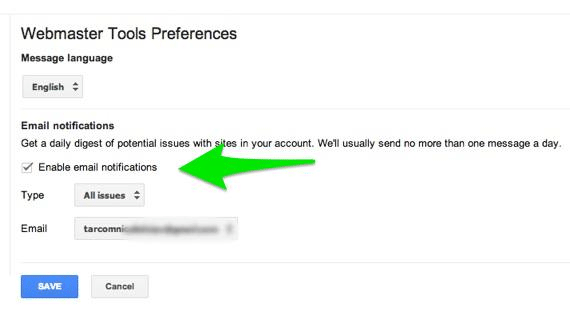

image04


While you can pick specific issues to be notified of, it’s best to set the type to “all issues.”


You’ll immediately get notified if there are any signs of foul play like getting hacked or having malware on your site.


Next, get email updates about new backlinks: The longer you wait to address a negative SEO attack, the more likely it is to be successful.


If you get a daily email that gives you a quick overview about new links pointing to your site, it will be obvious when someone spams your site.


If you see an abnormal quantity of links or tons of links with anchor text such as “pills,” “payday loans,” etc., you have an issue.


There are a few tools that can help you track your backlinks.


A free option is OpenLinkProfiler.


As a free option, it’s limited, but it’s still a decent solution for small sites.


Once you create an account, go to the Backlinks panel, click “Link Alerts,” and then input your website and email:
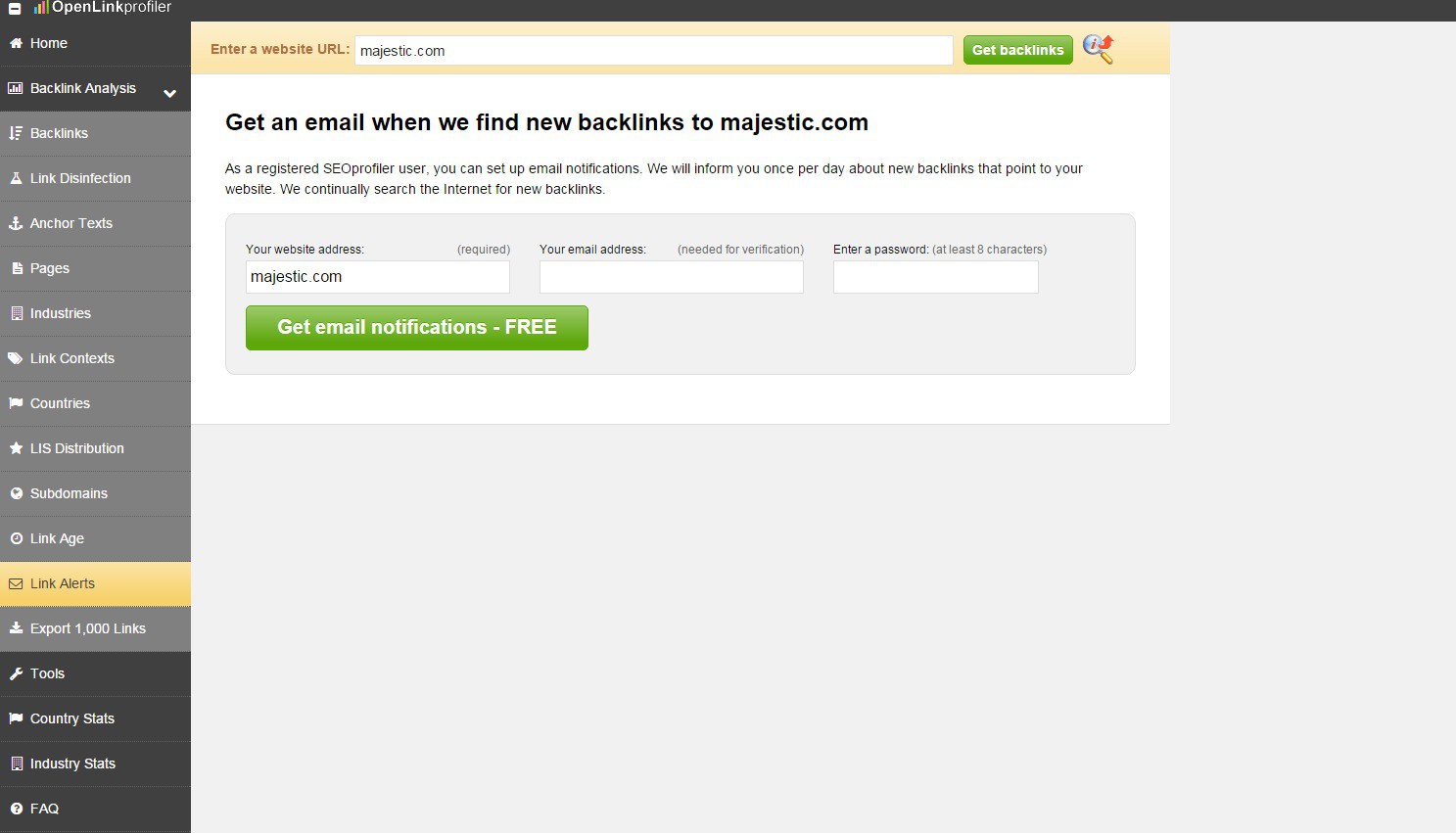

image03


You’ll then get a daily email that lets you know whether any new backlinks were detected.


Alternatively, Ahrefs (a paid tool) also has this feature, but it has a more reliable (and sizeable) database.


You can either look at new links manually by going to the “new links” page:
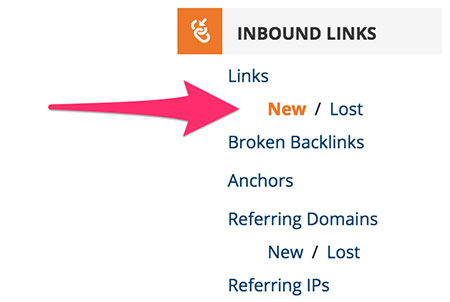

image20


Or you can also go to the “email notifications” section and change the status of new/lost backlink notifications to “Daily”:
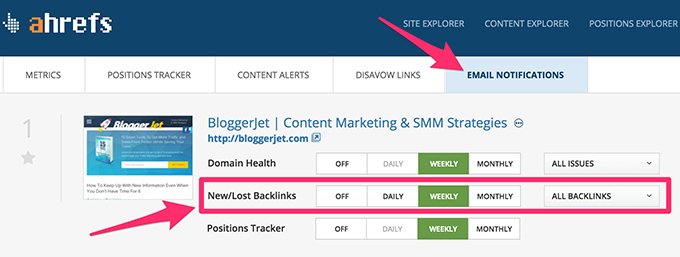

image01


Again, you’ll get a nice email summary every day.


You don’t need to do anything big with these email summaries. Just take a 10-second scan of them for anything out of the ordinary.


Step #2 – Monitor your top backlinks


There’s one more type of negative SEO attack you should be aware of although it’s far less common than the ones I mentioned above.


Sometimes, someone doing negative SEO will create a new email account similar to yours (e.g., Neil.Patel38388@gmail.com) and then email sites that link to you asking them to take down the link to your site.


This is clearly unethical, but some people don’t care.


While you can’t monitor all of your links, you can keep track of the best ones.


You can find your best ones with any backlink database tool. On Ahrefs, you type in your site in the “site explorer” tool, and then click on “links” in the sidebar:
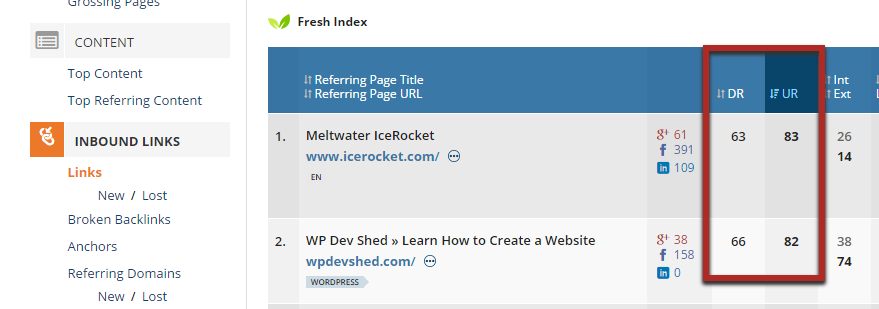

image05


This will bring up a list of links to your site, sorted by URL rank by default.


Get to know your top 20 or so links well because they’re likely the ones that will be targeted.


From here, do two things:


  • pay special attention to them in the “links lost” section of those emails we set up in step 1

  • check all of them manually once in awhile (maybe once or twice a month) just in case one slipped by. You could create a tool to do this for you if you’d like.


Finally, you may be able to prevent a negative SEO attack from being successful by doing all your outreach from an email address for your domain (e.g., Neil@QuickSprout.com).


Then, add a line to your signature that reads something like this:


This is the official email address I use for all matters regarding (site name).


That way, some of your contacts may notice something fishy when they get a removal request from a different email.


Step #3 (if applicable) – Monitor and report fake reviews and mentions


This next step applies mostly to local businesses although any website can implement it to be safe.


Many businesses get links from review sites such as Yelp:
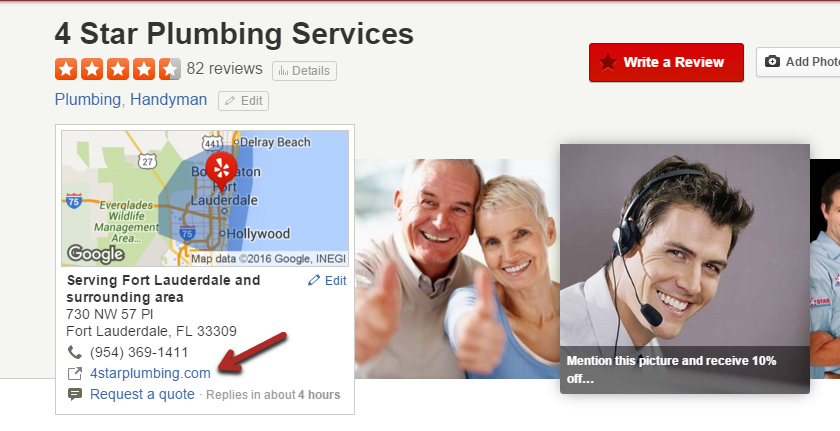

image06


These links often carry a lot of weight since Yelp is an authoritative site in the eyes of Google.


However, the quality of the link you get from Yelp depends on how your business is weighed compared to other businesses in your industry.


For example, if someone searches for plumbers in Florida, they get a page like this:
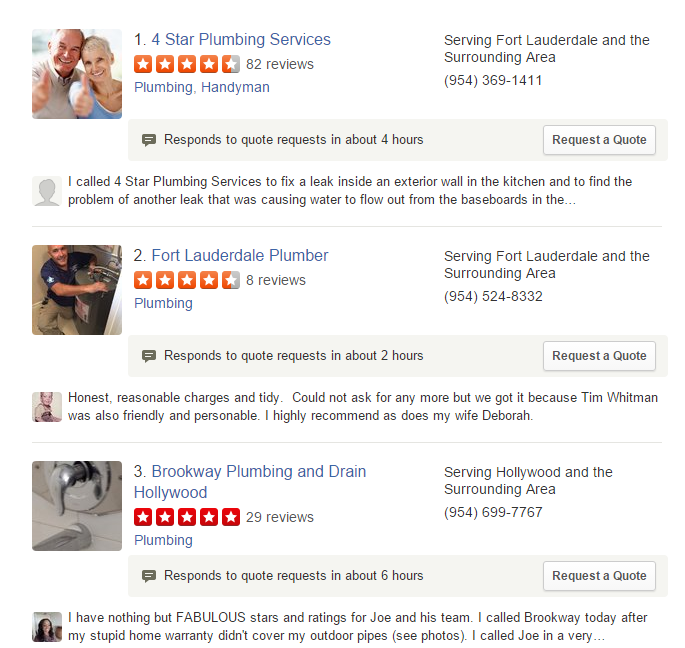

image15


That’s the page that’s most authoritative to Google, not the individual profile pages for each business.


But the profile pages are the ones with links going back to the businesses’ sites.


Finally, the higher up on the page the link is within the search results, the more authority is transferred to the profile page, which is then transferred to the actual business website.


This is because links higher on a page are generally more important than those lower on the page.


A competitor involved in negative SEO has an opportunity to hurt you in a few ways here.


The plan will be to leave negative reviews on your profiles, which will lower your rankings on sites like Yelp. This in turn hurts you by:


  • lowering your search engine rankings

  • lowering the number of customers who hire you based on those reviews


If someone resorts to those dirty tactics, react quickly.


Since you should know all your customers, it should be easy to spot fake reviews right away even if they’re well written.


Dealing with them is pretty easy in most cases. Sites like Yelp usually have a “report this review” button available to the owner of the business profile:
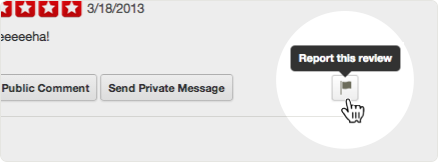

image02


The tricky part is finding the fake reviews in the first place and doing it fast enough so that you can remove them before they cause any damage.


To find them, use some sort of a monitoring tool.


Google Alerts is an amazing free tool that is enough for most, but there are also advanced tools you can use if you feel that you need more.


Once you’re signed in, enter the term you want to create an alert for into the text box. Then, click the Options link below to expand your options:
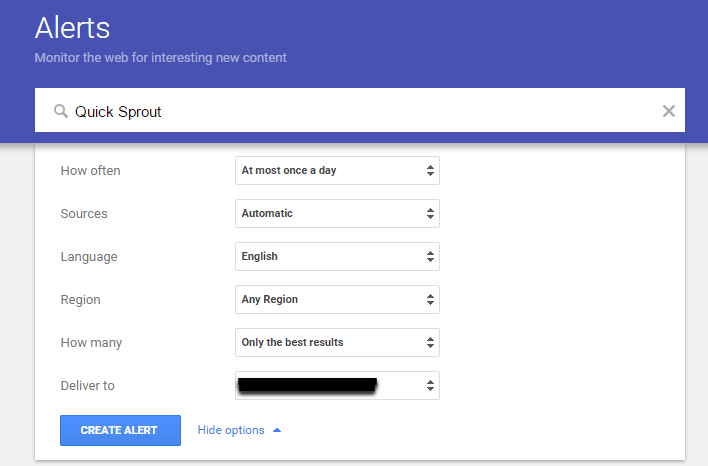

image17


I recommend getting these alerts at least once a day.


You should set up alerts for all the names that could be used for your brand. For example:


  • Quick Sprout

  • QuickSprout

  • Neil Patel

  • Misspellings – e.g., Neal Patel, Quik Sprout


From the emails you get, you can quickly find reviews of your brand and its mentions in groups and forums.


This will help you not only protect yourself from negative SEO but also maintain a good brand image in general.


Finally, you also might want to manually monitor specific review sites that are really important to your business.


They could be Yelp, Amazon, Angie’s List, etc. If they send you customers on a regular basis, check in with them once every day or two.


Step #4 – Disavow bad links


The final step is a last resort.


In theory, the best plan is to just not make any enemies, but even that doesn’t always work.


Eventually, you may be faced with that huge spike of spammy links that threaten to destroy your Google rankings.


You need to make sure that Google doesn’t count those links when the algorithm is deciding where to rank your pages.


It’s a tool that can be dangerous because it can actually harm your rankings if used incorrectly:
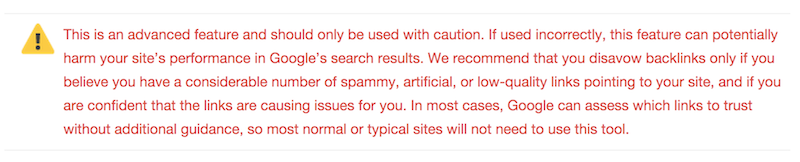

image16


Basically, you create a text file that contains all the URLs that should be ignored, and Google will do that the next time it crawls any of those pages.


However, if you disavow a link that was actually helping one of your pages rank well, that page now has one less good link.


What this means is that you need to be careful, and I’ll show you how to do just that.


A possible shortcut: If you have an Ahrefs account with a standard plan or higher, you have access to a disavow feature.


You can turn it on beside the main search bar:
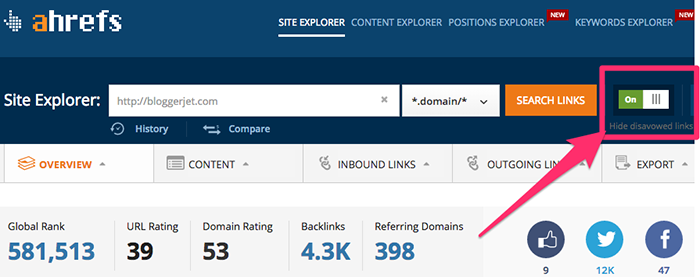

image18


In the link reports, you’ll see an option to disavow a URL or domain by clicking a link:
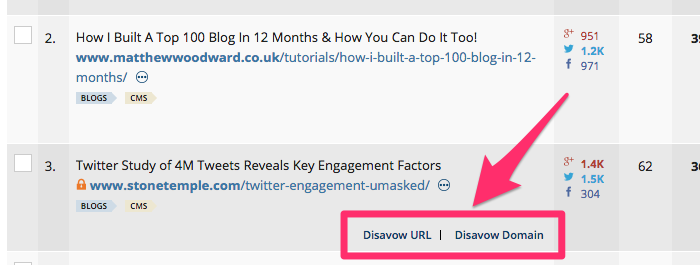

image21


At any point, you can go to your “disavow links” and export a file that could be uploaded into the disavow tool.
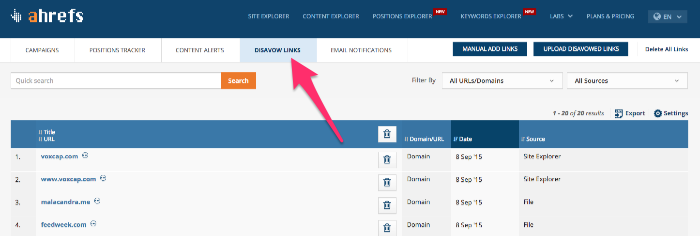

image08


This will save you time in the long run because you don’t need to worry about tracking old links that you’ve disavowed, but it’s not mandatory either if your account doesn’t support it.


Disavowing manually: This is the option that most use, and it works fine.


First, you’ll need to download as many backlinks pointing to your site as possible. It’s difficult to get all the links, but if you use multiple sources, you can get a good number of them.


Start with Google Search Console (former Webmaster Tools). If you go to the backlinks section, there’s an option to download sample links and “latest” links. Do both:
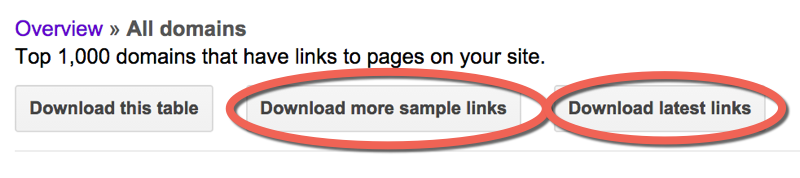

image14


Then download whatever links you can get from backlink databases such as Ahrefs, Majestic, Open Site Explorer, and Open Link Profiler.


Add them all to one giant spreadsheet. All you really need is the URL/domain name.


Here’s the scary part:


You need to determine whether each link is legitimate or not.


This involves a lot of manual tedious work for large sites.


You can use some shortcuts such as:


  • looking for spammy domain extensions (e.g., “.ru”)

  • looking for spammy anchor text (e.g., “viagra”)

  • looking for well-known domains that are obviously good links


That’s the bulk of the work. You’ll have to visit many URLs to check them. Consider dividing this work up if you have a team.


Next, you need to strip the trailing URL data so that all you have left is the domain name.


To do that in Excel or Google sheets, use this formula in a column next to the URLs:


=left(B1,find(“/”,B1,9)-1)


Drag the corner of that cell down so that the formula is applied to all the URLs in the column:


image10


In the example above, you’d start with column B and end up with the bare domains in column A.


Next, get rid of the “http://”, “https://”, and “www.”. You can do this with a simple “find and replace” function (replace each phrase with a blank space).
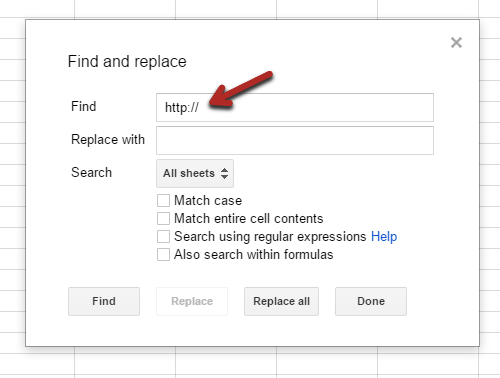

image07


Next, highlight all the domains and remove the duplicates.


Finally, you need to add the term “domain:” in front of all the sites so that the disavow tool knows to discount links from the entire site.


While you can disavow specific URLs, it’s usually best to remove all the links from the spammy domain.


Do this by using the formula:


=”domain:”&A1


Here is the resulting table:


image13


You should now have a list like the one in column B above.


Finally, copy and paste these into a simple text file:
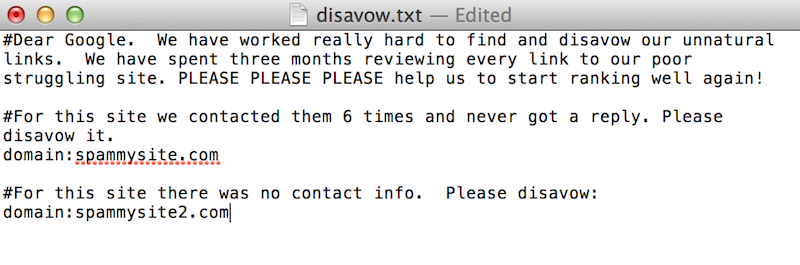

image11


You can add comments using the “#” sign, but those are just for you. The disavow tool simply relays the information about the links to the search engine’s algorithm.


Finally, go into the disavow section of your Webmaster Tools account, and choose the domain that these links affect:
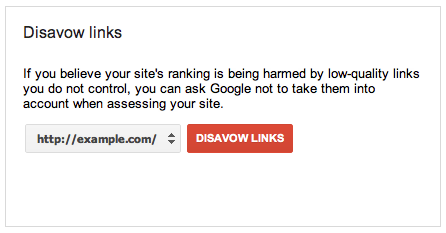

image00


After clicking that button, you can upload your disavow text file.


As long as you did everything right, you’ll get a success message like this:
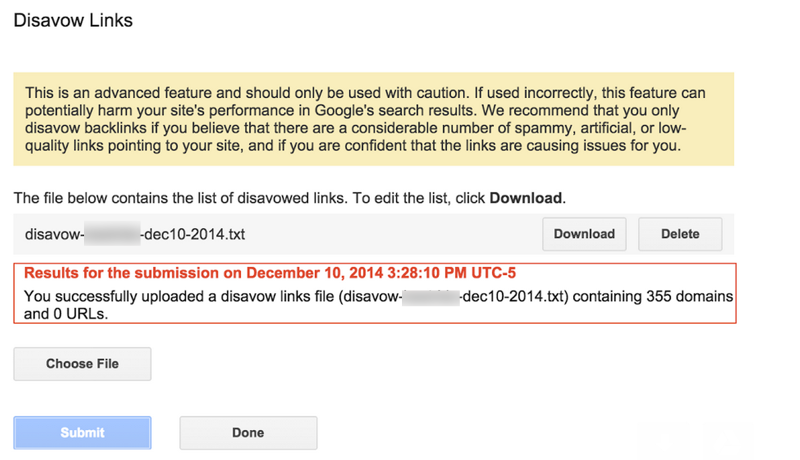

image09


It’s a lot of tedious work, but it’s not too complicated.


Within a week or two, Google should remove most of those bad links from consideration.


Conclusion


Negative SEO is a terrible business practice, but some people still use it.


I’ve given you a 4-step process that will protect you against the bulk of potential negative SEO attacks or at least limit the damage they do.


I encourage you to employ these steps as soon as possible because they aren’t very useful if you use them long after the damage has been done.


Have you ever been affected by negative SEO? Share your experience in a comment below.


The Little-Known Metrics Your SaaS Company Should Be Measuring (But Probably Isn’t)

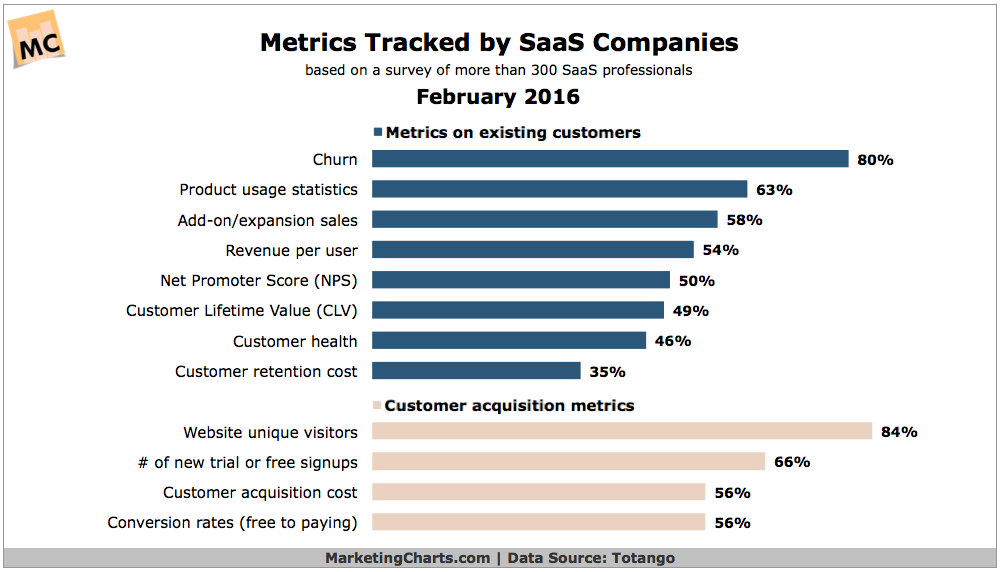
When it comes to SaaS metrics, you’re well-acquainted with all the usual ones: churn, revenue per customer, customer lifetime value. But a new survey by Totango, released as part of their annual State of SaaS Metrics report, is showing some insights into what we’re measuring, and what still needs to be incorporated. So the question then becomes – are you measuring the right stuff? And what’s missing from the metrics puzzle? Let’s take a look:


saas-tracking


There are a few telling concerns with this chart. First, it proves we’ve got churn, customer usage and expansion/add-on sales locked down. We’re using that information to make intelligent and confident decisions, but there’s more work to be done.


Understanding Customer Health as Part of the Lifecycle


For example, what’s meant by “customer health”, a metric that 46% of respondents planned on adding this year? It’s much more than just measuring the levels of customer satisfaction. It’s also about getting in touch with customers who may be signed up and established, but have yet to truly use the service to its fullest. There are reasons why their account has turned stale – and it’s your responsibility to find out and act on those reasons.


Lack of understanding on how to use the system efficiently? Not sure about implementation? How can you make the process easier or guide them through the first steps?


And that’s not even counting new users, who need a more helpful, user-friendly onboarding system. They’re short on time and need direction – fast. And of course, we’re not neglecting loyal customers – those who use and advocate for the service. We need to work to keep them that way.


In short, we have different ways to measure and adapt to customer health levels as their use and understanding of the service grows. Lumping all of these people into a single funnel or list is doing them (and yourself) a serious disservice. To put this kind of metric into action you’ll need to measure tangible things like how many sites your product is used on, how many projects your customers have running and so on. Being able to segment them based on usage (or lack of it) is vital to creating a process that gets them more involved and encourages even greater brand awareness.


How Much Does it Cost to Retain Customers?


You likely already know how much it costs to acquire customers – but what about retention? There are plenty of formulas out there to guide you, but one of the most overlooked areas where you can find a goldmine of information is your subscription payments and processing. Sure, you may have looked at that information to see how well your latest promotion is doing – but have you looked at how well it reflects your ability to keep customers subscribed?


Let’s say your average product price is $49/month and your customer lifecycle is two years. That’s $1,176 per customer. But if your customer unsubscribes after six months, that means you’ve only earned $294, leaving $882 in profits on the table.


And that’s just for one customer.


When you look at subscription length and compare it to overall churn rates, you’ll likely find a lot of hidden areas where retention rates can be improved and revenues can be increased.


The Weird Little Secret that’s Driving New Business


Here’s another interesting finding from Totango – a surprising way to generate new business for your service:


The freemium.


freemium


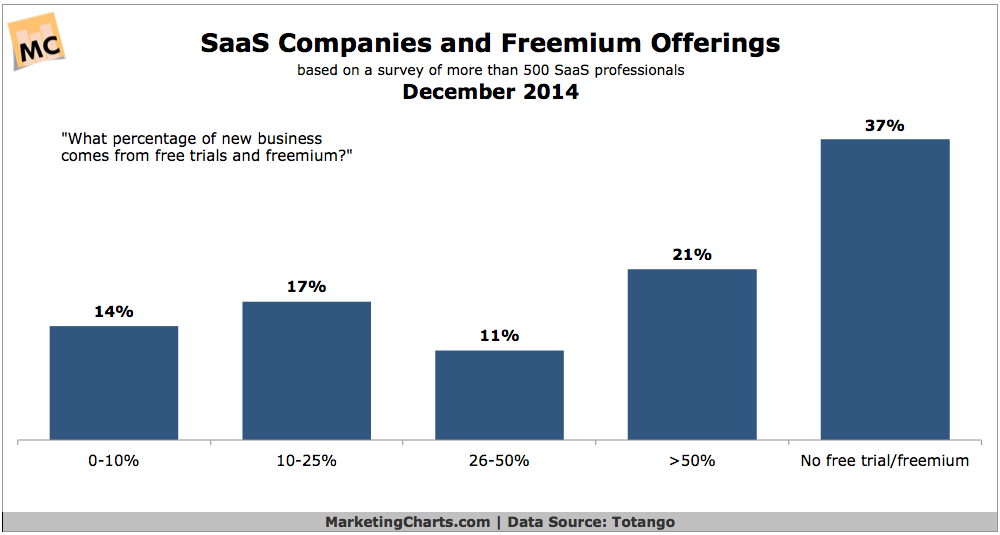
A little over a third of respondents in the survey stated that they didn’t use the freemium model, but one third of those who did saw most of their new business from it. That’s a significant amount of new income that simply wouldn’t have exist had they gone straight to paid status.


How to Make Freemium Work for You


For the uninitiated, freemium (free + premium) involves providing the basic services of the app or service for free, with the ability to upgrade or access additional features for a fee. Well known companies leveraging the freemium model include Dropbox, LinkedIn and Hulu to name a few.


Of course, one can point out equally unsuccessful freemium-based companies (particularly news companies that use paywalls) – and judging what to give away versus what users should pay for is a delicate balancing act at the very least.


The first step is to make your offer abundantly clear to new users.


Let’s look at Dropbox as an example. Dropbox gives everyone 2GB of storage for free just by creating an account (more if you recommend a friend and they sign up). If you want more, you’ll have to pay for it. Easy to understand and act on.


Contrast that to Hulu (formerly known as Hulu Plus), the video streaming service. Hulu initially started its subscription service by promising no commercials. Then it changed to “some commercials” and offered a newer, pricier tier with “absolutely no commercials, we promise”. Customers frequently ask why they’re seeing commercials if they’re paying for the service in the first place. Time will tell how well this strategy will work – especially when compared to competitor Netflix’s ad-free paid streaming service.


Deciding what’s free and what needs to be paid for are two important questions you’ll need to ask yourself when considering the switch to a freemium model:


freemium-modelsImage Source: Harvard Business Review


Holding On for the Freemium Rollercoaster Ride


It’s also worth noting that if you decide to test the waters on the freemium model, you’ll want to hang on for the ride.


lifecycle


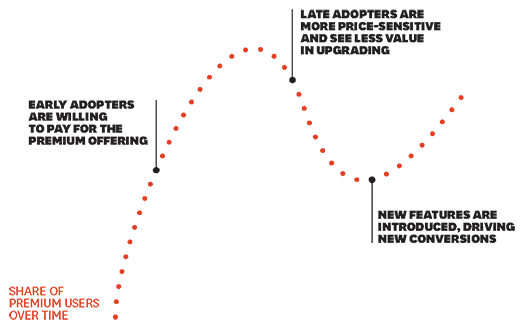
In this example, from the Harvard Business Review, the conversion rate lifecycle gradually rises and dips as early adopters and price-sensitive users ebb and flow in their use of the product. Being able to understand that this is a normal, typical cycle for freemium helps you prepare in advance by looking for ways to entice free users to upgrade, and reminding them of all the benefits they get as a result.


And as the report above notes, you don’t need to stay mired in your original offer. Times change and trends change with them. Dropbox was originally just a backup service, not a collaboration tool. LinkedIn was targeted to job recruiters but has blossomed into a business social network. If old mission statements are no longer relevant, feel free to update and revise – the rest of the Saas industry certainly is!


Now It’s Your Turn…


What are your thoughts on these little-known but incredibly important SaaS metrics? Are you taking steps to measure them in your own company? How is it working for you? Share your stories and perspectives with us in the comments below.


About the Author: Sherice Jacob helps business owners improve website design and increase conversion rates through compelling copywriting, user-friendly design and smart analytics analysis. Learn more at iElectrify.com and download your free web copy tune-up and conversion checklist today!


Marketing Day: Facebook Now Has 3M Advertisers, Second-Tier Links & Anchor Content

Here's our recap of what happened in online marketing today, as reported on Marketing Land and other places across the web.


Please visit Marketing Land for the full article.


What Is Everyone Blabbing About? 8 Tips for Creating a Killer Marketing Blab

video-marketing


Do you Blab? Does your brand blab? Are your brand’s Blabs bland? Do you need a bland brand Blab breakthrough? (Say that three times fast)


There’s a new player in the live video streaming arena, and marketers are starting to get excited about the possibilities. Blab has a few nifty features that set it apart from apps like Meerkat and Periscope. Since it’s currently free to use (and in Beta, as its developers work on developing a business model), now is the perfect time to check it out. If you want to add live streaming to your video marketing strategy, Blab can be a great way to build your community. Here are a few reasons marketers are flocking to Blab:


It lasts beyond the moment.


Other livestreaming apps are all about watching in the moment. For example, Periscope only saves your stream for 24 hours. But you can record your entire Blab, up to six hours of video, even pausing and resuming recording. After the session ends, you will get a link to raw audio and video files. Turn the recording into a podcast, upload it to YouTube, embed it in a blog post—Blab sessions are meant to stick around.


It’s collaborative.


Meerkat and Periscope are meant for single-player. People can comment on the stream, but mostly they watch, you do. In Blab, you have four slots for people to join in video/voice chat. Listeners (Blabbers? Blabbees?) can ask to join if there’s an open slot, and you can add them in with a single click. That makes for a much more interactive experience.


It’s simple and versatile.


Blab has a browser-based client (no downloads required) and apps for iTunes and Android. Broadcast from your desk or on the go. The user interface is streamlined and simple, so it’s easy to get started.


It’s small, but about to take off.


There’s a lot of buzz around Blab right now, but it’s still relatively small. That means a great chance to stand out and build a community before it gets flooded with content. As Social Media Examiner’s Joel Comm puts it, “The great thing about Blab, as it is still in beta, is that we aren’t early adopters, we’re pioneers.”


Ready to start blabbing away? Here are eight tips to keep in mind as you establish your presence.


#1 – Don’t hate, participate.

Contributing to other Blabs is one of the best ways to build a following. Search for topics you can contribute to, watch the session, and participate in the chat. If you can add some value, don’t hesitate to ask for a spot on screen.


#2 – Go in with a goal.

Treat Blab like any other marketing effort—have a goal for what you want to accomplish, what the next step is for your followers, and how it integrates into your strategy.


#3 – Don’t forget to record.

Blab sets recording to “off” by default; you need to activate it every session. Don’t miss the chance to repurpose this free video content. At the very least, you’ll want to use it on your site to coax more viewers to your next Blab. Plus, recorded Blabs continue to be hosted on the site, which can help people find and follow you when you aren’t broadcasting.


#4 – Add tags to get found.


The search function on Blab isn’t the most robust instrument. Like Twitter, it depends on tags for indexing. So make sure you add descriptive tags to help listeners find you.


#5 – Establish a rhythm.

Remember how you used to rush to the TV set every Friday at 9 p.m. to watch the X-Files? No? Man, I’m old. Never mind. The point is, you want your audience to make attending your Blabs a habit (Blabbit). Make sure to broadcast at the same time of day each time.


#6 – Invite guests your audience wants to hear from.

While a few Blabbers are successful as a one-person show, make it more engaging for your audience by adding intriguing guests. And keep that fourth slot open, so Blabbees can join in.


#7 – Keep an eye on the chat.

There are two chats to watch on Blab—the right panel is an in-Blab chat, and the left panel is a Twitter feed. It can be a lot to manage—it’s a good idea to have one person presenting and another watching the chat. 


#8 – Loosen up.

Blab isn’t the place to run a suit-and-tie webinar or a stiff, salesy product demo. Viewers enjoy off-the-cuff, natural, in the moment conversation. That doesn’t mean you have to go in unprepared—but take care not to come across as scripted or overly promotional.


Marketers are excited about Blab because it represents some of the best aspects of content marketing: it’s designed to foster community, it’s easy to repurpose the content, and it allows for a true dialog between the host and the audience. If live streaming fits your brand, Blab is definitely worth checking out. In conclusion:


Want to avoid brand blandness? How can we help?


Header image via Shutterstock


Email Newsletter
Gain a competitive advantage by subscribing to the
TopRank® Online Marketing Newsletter.


© Online Marketing Blog - TopRank®, 2016. |
What Is Everyone Blabbing About? 8 Tips for Creating a Killer Marketing Blab | http://www.toprankblog.com

The post What Is Everyone Blabbing About? 8 Tips for Creating a Killer Marketing Blab appeared first on Online Marketing Blog - TopRank®.


Why You Must Increase Your Negative Reviews

Why You Must Increase Your Negative Reviews written by John Jantsch read more at Duct Tape Marketing


hug-your-hatersMarketing Podcast with Jay Baer


Okay, I’ll admit, the headline for this post probably seems a little odd, so let me explain.


No one likes or wants negative reviews, but the fact is, that’s how you get better.


In a perfect world, everything your business does makes the customer smile, but I don’t know too many businesses that live in that world.


In reality, it is quite likely, there are many things your business does that are confusing, irritating and surprising – the problem is that it’s also quite likely that you have no idea what those things are.


By encouraging and rewarding people to give your feedback at every turn, you can learn and hopefully fix things that do not serve – without this mindset you’ll go blindly out there wondering why you can’t keep your best customers happy and loyal.


My guest for this week’s episode of the Duct Tape Marketing Podcast is Jay Baer, founder of Convince and Convert, and author of Hug Your Haters: How to Embrace Complaints and Keep Your Customers. We discuss customer service, the nature of complaints in today’s market and the basics of improving your customer retention.


Baer explains why so many businesses despite negative feedback and why you can’t afford to do so. In Hug Your Haters he relates a story of a marketing officer who claimed that her number one current objective was to triple negative reviews. Now, while that may seem like a terrible thing to do on the surface, the point is she was simply going to encourage and involve her customers in the process of helping them get better – and that’s the lesson this book teaches so eloquently.


Customer service is the new marketing!


Questions I ask Jay:


  • How can you view Customer Service as a competitive differentiator?

  • Why is exceptional customer service so rare?

  • What’s the first thing you should do to improve your customer service?


What you’ll learn if you give a listen:


  • How you can turn a complaint into a raving fan

  • The root of most of your customers’ complaints

  • How negative feedback affects your mindset as a business owner