Friday, April 1, 2016

7 Cross-Channel Apps of Highly Effective Modern Marketers

In today's hyper-connected world, it's important to have a rock-solid cross-channel marketing strategy, and one of the easiest ways to execute that strategy is through your marketing automation system. As we share in our new eBook, Visions From the Future of Marketing Automation: An Explorer's Guide to Cross-Channel Marketing, there are lots of ways to get creative in reaching your customers. Below, we've outlined seven types of apps that you can plug into your marketing automation system to help make your cross-channel campaigns more efficient, engaging and effective.  


1. SMS/MMS Apps

In our smart-phone co-dependent society, customers are constantly checking their phones, and sending a quick text or picture message is a great way to get in front of them with timely offers, information, announcements, and more. SMS and MMS are also great for reconnecting with “hard-to-get” people on your target list.


Tip: Make sure your messages are short, simple and focused on one point.


2. Calling Apps

Instead of sending contacts to CRMs or routing them through sales execution tools, try using a calling app that enables your team to talk to customers directly. A good calling app will enhance your workflow efficiency and enable you to identify the conversations that are delivering the best return, so you can adjust your approach accordingly.


Tip: Use talking points instead of a script to ensure you come across as authentic, not robotic.


3. Voice Message Apps

In the event you need to leave customers and prospects a message, voice messaging apps can alleviate the stress of speaking on the fly by enabling you to pre-record a personalized message based on insights and information from your contact list. Some apps even allow you to use voice prompts to make messages interactive.


Tip: Whatever you've got to say, do it in 30 seconds or less.


4. Payment Apps

Once customers are ready to show you the money, you can help them help you by hooking up your forms and landing pages with a secure payment app. These apps enable you to process credit card payments and track transactions for products, services, events, online stores, and more.


Tip: Always let customers choose how they want to receive their receipt (email, text, paper).


5. Geo-Targeting Apps

One of the best ways to make sure your campaigns are in the right place at the right time is to use a geo-targeting app to search and segment your contacts. Geo-targeting empowers you to personalize content for your target audience based on their location, which is especially handy when you want to make sure an event is well-attended by locals.


Tip: Start with a small radius when segmenting your target and increase it incrementally.


6. Direct Mail Apps

Sometimes our digitally dominated world leaves customers longing for something real. When that happens, use a direct mail/print-fulfillment app to send customers a physical reminder of your company that they can touch, like a postcard, catalog, or even gift items.


Tip: Sending personalized thank you notes to customers is a smart way to build brand loyalty.


7. Validation Apps

People move on, move up and make mistakes - all of which impact your database, your sales, and ultimately your bottom line. To make sure your lists are clean, use e-mail and address validation apps. Most of these apps enable you to validate emails and addresses on your landing page, before they clutter your database with misinformation. They also normalize and standardize data throughout your ecosystem, which not only makes everything look professional, it helps eliminate and consolidate duplicate addresses.


Tip: Information is constantly changing, so validate all contacts often. 


Every part of your marketing needs to go mobile, especially your marketing automation activities. The Modern Marketing Essentials Guide to Mobile Marketing will make sure that mobile is always top of mind.


A Step-by-Step Guide to Conducting a Content Audit

audit


Is your content a mess?


It might be high quality (it might not be), but that doesn't mean that it's organized.


It also doesn't mean that you're producing all of the right kind of content that your readers want to see.


Most online businesses that use content marketing have weaknesses in their content.


Either the content isn't performing as well as it could be, or they're missing content on certain topics and keywords altogether.


And this includes good businesses too, so don't feel bad if you don't think your content marketing is quite as good as it could be.


Instead, recognize that this is an opportunity to further improve your content marketing processes.


So, how do you find these weaknesses?


As you may have guessed, you find them with a content audit.


A content audit helps you assess your current content as well as shape your future content strategy.


In this post, I'm going to show you a 5-step content audit that you can follow (although there are many other effective content audit processes). 


Step 1: Generate a list of all your content


The first thing you need to do is take stock of what you have.


You'll want to compile a list of URLs and put them in a spreadsheet.


If you have a small site, you can do this manually, but otherwise I suggest you use software like Screaming Frog to generate a list.


The free version will crawl up to 500 links on a site, so as long as your site is small, you'll be fine. Otherwise, you'll want the premium version, which is worth the investment for any serious marketer.


Enter a starting URL in the text bar at the top of the tool, and press Start:


image06


You can't configure the options in the free mode, but the defaults should be fine.


When it's done, set the filter to HTML, and export the results.


image05


From this list, you'll want to keep all the URLs with a status code of “200.”


If you find that you're missing a lot of URLs, which is possible if your internal linking isn't great, you can use another option like a sitemap generator.


If you use the tool I just linked to, enter your starting URL again, and the tool will crawl up to 500 pages:


image07


You can then copy the results and paste them into a spreadsheet. You might have to clean them up a little, but it will work.


Step 2: Retrieve metrics, and categorize content


Now that you have a good idea about what you have, it's time to figure out how it's performing.


Just because you have an article about “SEO for cats,” which is a topic you wanted to cover, doesn't mean that the article is getting traffic or doing anything with the traffic it gets.


Content that is underperforming is going to be the first main weakness that we'll identify.


Below is a list of metrics that you might want to collect. Add a column to your spreadsheet for each one. Feel free to add any others that you care about:


  • Title of content - You can pull this right from Screaming Frog.

  • Length of title - You can also get this from Screaming Frog. Use it as a quick check for excessively long titles. Remember, it should be under 55-60 characters to show up fully in Google. This can affect your click-through rate (CTR).


image03


  • Category – Write down the topic of each page.

  • Ranking for main keyword (if available) - If there's a keyword you're targeting, record your ranking for it as of now.

  • Search volume for main keyword - A metric that will help you prioritize your SEO effort in the future. Get it from Google AdWords or any keyword research tool.


image04


  • Average organic search traffic per month – Get this from Google Analytics. Go to “Behavior,” and pick the page. Then add a secondary dimension of “source,” and look for the traffic data beside Google.

  • Average overall traffic per month - Again, get it from Google Analytics. Record the total traffic number by going to “Behavior,” and pick a page. Look at a time period of at least 3 months when possible, and calculate an average.

  • Meta description – Your meta description can also greatly affect your CTR. If your traffic seems unreasonably low for the typical monthly search volume, you can optimize your meta description to attract more clicks. You can also pull this from Screaming Frog.

  • Bounce rate of organic search traffic – Again, go to “Behavior,” pick a page, and add a secondary dimension of source. Look at the bounce rate metric beside the Google row.

  • Average time on page of organic search traffic – Use the same report as above, but get the average time on page.

  • Number of backlinks – Backlinks are a critical part of ranking well. Use a link database tool such as Majestic or Ahrefs to get the number of backlinks to each page (can be done in bulk).


image09


  • number of linking root domains – You should be able to get this when getting the number of backlinks. It tells you whether backlink numbers are inflated (i.e., 10,000 backlinks from one domain).

  • URL rank - Different tools have different metrics (e.g., MozRank for OSE, URL rating for Ahrefs) to judge the overall quality of links. Get one to get a rough idea of your page's authority.


image01


  • Total social shares - you could also break this down by network. You can get this information using a tool like Sharetally.


image08


If you plan on doing multiple content audits or you're working on a very big site, doing all this manually would be crazy.


Some of it is easy to do all at once, like collecting numbers from Screaming Frog.


But all the other actions can also be done in bulk (and automated) with a little technical know-how.


Hire a programmer to build you a simple tool that pulls all this data from different APIs, and it will save you hours of work.


Step 3: Create an in-depth reader/customer profile


We'll take a step away from your actual content for this part and instead focus on your target audience.


This step consists of two parts.


Part #1 – Identify your reader: It's a basic rule for any marketing – create things that your target audience is interested in.


It applies to social media marketing, content marketing, SEO…and so on.


But in order to do that, you first need to determine who your reader is.


Refer to this section of one of my ultimate guides if you need help doing this.


Part #2 – Determine what they're interested in: Now, you can start to learn and understand what they're interested in.


You figure that out by researching demographics (age, gender, etc.) and psychographics (what they believe in).


Here's a good introductory guide that will walk you through the most important demographics and psychographics.


Once you've done that, you should have a fleshed out reader avatar.


image02


Part #3 – Use those interests to identify topics and keywords: Once you have a pretty good understanding of your target audience (be as specific as possible with everything), it's time to translate that to content.


A good place to start is to use basic keyword research tools.


image00


After that, use these advanced keyword research methods to find even more keywords and topic ideas.


You should record all of these keyword and topic ideas in another spreadsheet, complete with any search volume data they have.


Note that you are not limited to just these topics for content. From your knowledge of the reader, you might be able to know that they'd be interested in something that can't be searched for.


You can still add these topics to the list; you'll just have to get traffic for them from sources other than search engines.


Step 4: Conduct “gap” analysis


Now we have two spreadsheets:


  • One with all your current content (and metrics)

  • One with all the content (or content ideas) your target reader is interested in


It's time to look at them together.


Area #1 – See which content you're missing altogether: This has to be done manually and will take quite a bit of time.


Start by pairing up those keyword and content ideas to the content you already have.


Essentially, you're copying the entire row from the first sheet that we made and pasting it right beside the keyword it matches.


Here's a small snapshot of what it might look like:


image10


What you'll find at the end of it, in almost all cases, is that for some of the content/keyword ideas, you don't have any matching content.


That's a clear problem: you have a gap.


Obviously, you'll need to fill these gaps, but we'll get to that later.


Area #2 – See which content is not performing: I mentioned this briefly before. If your current content isn't generating any traffic, it's about as useful as if it was missing altogether.


That's not good enough.


The challenge here is to identify this underperforming content.


Unfortunately, there's no specific formula I can give you here.


It comes down to what you consider good. For some sites, getting 200 visitors a month to a piece of content is horrible, while for others, that's great.


On top of the absolute amount of traffic your content gets, you want to consider two other main factors:


  • Its search rankings

  • Its potential search traffic


If a page is ranking in positions #4-10, it's not getting much traffic.


However, with some extra work, you could easily get it to rank in the top 3 and get more traffic.


But you also have to consider if it's worth the effort.


If the keyword gets a few thousand searches a month, it probably is. If it gets 20? Probably not.


At this point, you just want to highlight which content isn't getting much traffic.


Next, we're going to bring it all together.


Step 5: Create your new content strategy


The final step is to create a content strategy that will address all the weaknesses that have been identified up until this point.


And it requires a lot of manual work and careful consideration.


Step #1 – Create a column for action: It's time to add another column to your spreadsheet.


I suggest adding it to the very beginning.


In this column, you'll add a final label reflecting the corresponding action you want to take on it.


Again, choose any labels you want, but you could use these ones if you'd like:


  • Leave” – The post is performing well, no changes are needed.

  • Create” – A default label for any content idea that needs to be filled.

  • Merge” – Sometimes, you might have more than one piece of content for one topic (it happens if your content is not well organized). It's usually best to merge these together into one best version.

  • Improve” – If your content is underperforming, you'll want to improve it.


You'll need to go through each idea, one by one, to do this.


Step #2 – Create a column for priority: There's one final column you need to make. Put it right next to the action column.


Some gaps are bigger than others.


It makes sense to fill those big gaps first and get to the smallest ones only when you have time.


Here, you're going to assign each action (other than “leave”) a priority from 1-10 (10 being the highest).


You need to factor in those things we looked at like potential for SEO traffic.


If a piece of content has the potential to generate a ton of new traffic, it gets a high priority and should be edited or created as soon as possible.


Finally, create an action list: Now that your sheet is filled out, sort all the actions based on their priorities.


Then, plan your content marketing goals, tasks, and resources so that you can start filling in these gaps one by one, in order of priority.


Conclusion


No collection of content is ever “complete”-there will always be some gaps.


Conduct a content audit on a regular basis, and identify your biggest weaknesses.


It's a ton of work and leads to even more work (taking action on your results), but it is an extremely effective way to consistently improve the results from your content marketing.


This can get a little overwhelming if you haven't done a content audit before, so if you're confused about any of this, leave me a question below.


Thursday, March 31, 2016

The Two Types of Programmatic Advertising and Why Programmatic Matters

Before we get to the topic at hand, a definition of programmatic advertising. We define it simply as “Automated advertising buying coupled with machine learning.” Digiday defines it as "ad buying what typically refers to the use of software to purchase digital advertising, as opposed to the traditional process that involves RFPs, human negotiations and manual insertion orders. It's using machines to buy ads, basically.” 


Marketing Land, on the other hand, says programmatic advertising "helps automate the decision-making process of media buying by targeting specific audiences and demographics.” 


In terms of the different types of programmatic advertising, according to the Interactive Advertising Bureau (IAB)-which is an industry organization geared toward ensuring standards across the advertising ecosystem-there are two types of programmatic buying (the process in which you're buying advertising):


1. Programmatic Direct

Also known as Premium Programmatic Advertising, this is an automated technology-driven method used for buying, selling, or fulfilling advertising. It provides for an Automated Guarantee Systematic automation of sales process. No insertion order (IO) or master services agreement (MSA) covered within the partnership.


2. Programmatic Real Time Bidding (RTB)

Two types of RTBs are Open Auction (audience targeting) and Private Marketplace Deals-which require a private marketplace and allow for fixed pricing and data overlays. We are beginning to see more and more of this type of programmatic advertising being used every day. 


Why does programmatic matter?

The shift to programmatic tactics means a few things for marketers and the industry as a whole. In essence, it has validated and delivered against the need for data- driven, and accountable ROI-based media delivery. Additionally, it has enabled an efficient method for publishers to monetize core inventory.


That said, some advertisers have struggled with premium inventory falling outside of the standard programmatic categories and are still being required to fulfill unique and exclusive campaign needs.


Regardless, the entire programmatic category is seeing increased spending across the board due to its predictive yield and ROI for marketers and publishers alike, not to mention easy insertion processes and lower barriers to entry for most advertisers. 


In a nutshell, programmatic advertising aligns media with brand lift metrics for real ROI and only spends money where it will be effective. 


Download The Programmatic Guide For Modern Marketers, Publishers, And Media Planners to get the basics of using programmatic advertising and a lot more including the other questions marketers need to ask themselves as well as the needs agencies need to address. 


Building a CTA Button Your Leads Can't Help But Click

It's the great marketing paradox. We spend hours brainstorming and months testing the copy of our calls-to-action, but whether we ask our users to Sign Up Now, Start a Free Trial, Get Started, Request Access, or Learn More, all we really want them to do it click the button.


Just click the button.


So why do so many of our quality leads fail to comply with our simple request? The way your CTA button is set up on a landing page is just as important as the CTA itself. Otherwise, it's a button to nowhere.


Make your CTA pop on a pretty page


Visual appeal is everything. Before they see your CTA button, your landing page is the first impression your potential customers will have. Choose attractive, simple imagery – if your page is cluttered, your visitors won't know where to look. Color scheme also is important: Using complementary but contrasting colors help a page to pop.


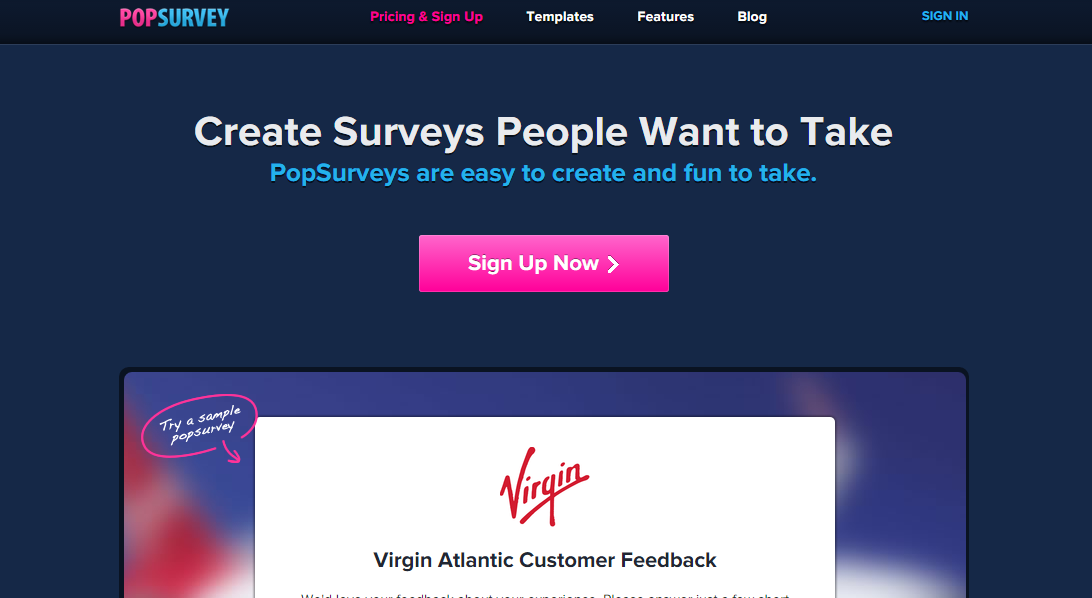
Notice how the below example from PopSurvey is coordinated with shades of blue, allowing the pink in the logo and CTA to pop out on the page. The secondary CTA, “Pricing & Sign Up” in the header is a slightly duller pink that still stands out but doesn't distract from the main call-to-action button.


pop-survey-signup-button


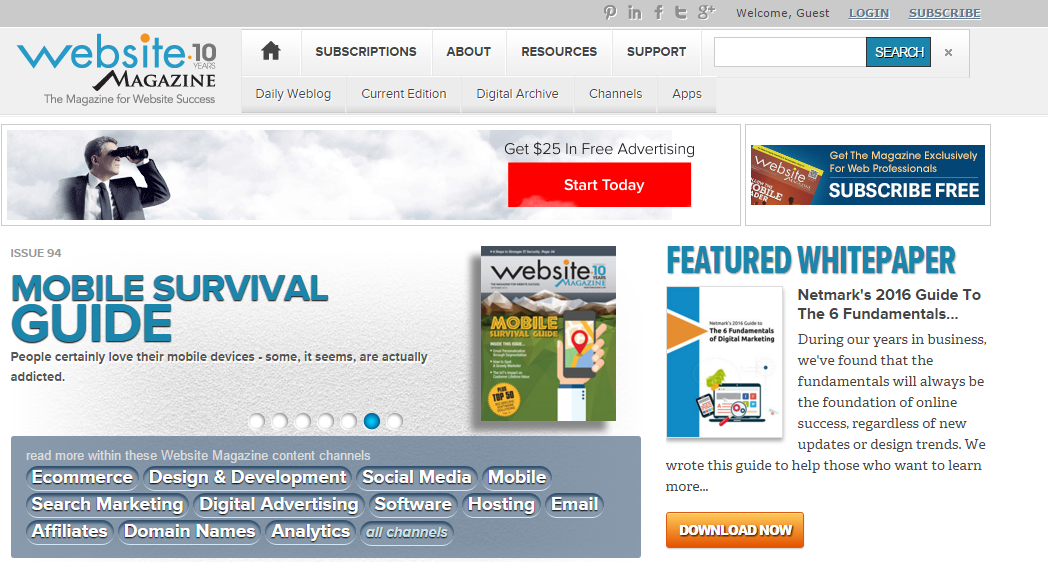
Ensure your page is easy to read and draws the attention of your customers' eyes – don't make them strain to read the text. The following landing page from Website Magazine is cluttered, has too many distracting colors, and small text. It's impossible to know where to look!


website-magazine-disorientied-design


Get to the point


Customers won't have the patience to stay on your page if they don't know what you're offering. Use clear, strong wording to elicit the quick reactions that all good Calls-to-Action invoke.


Active verbs like “join” or “discover” can make people feel like they'll be a part of something or learn something new. Negative questions like “worried?” and “confused?” can tap into human fears – always an attention-getter. And make it personal and urgent – use pronouns like “your” or “my” to convey ownership, as well as time-sensitive words, as in “Get my free newsletter now.”


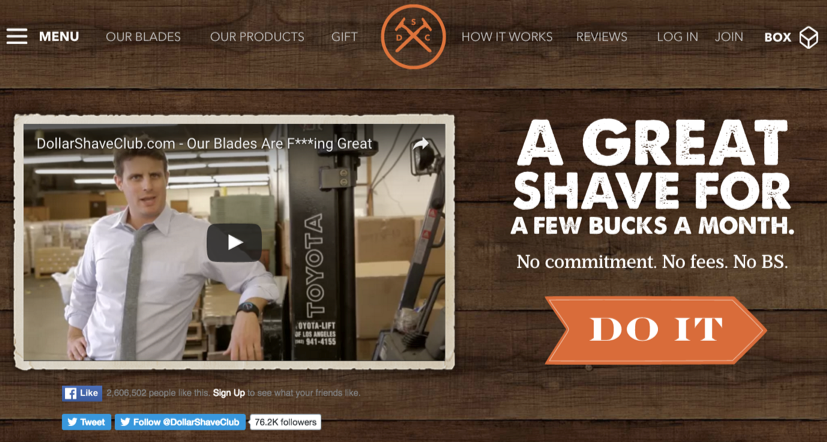
Dollar Shave Club is the perfect example of this. They speak to men (notice the “No commitment”) in a take-it-or-leave-it offer. Do it or don't. Either way, it's impossible to miss that big CTA.


dollar-shave-club-homepage-march-2016


The copy here is also fantastic. It flows well, the value proposition is clear, and each sentence subsequently gets shorter up to the CTA.


At Socedo, one of our landing pages, is frill-free. We're still A/B testing variations around “Start My Free Trial” or “Start My 14-Day Free Trial.” Regardless, previous testing has confirmed that the phrase “Free Trial” is crucial to our CTA buttons. It's simple and to the point, and users know exactly what will happen when they click the button. No matter where you look on our site–the landing page, the navigation, or the blog–you'll see a blue button with the “Free Trial” copy.


But just like any marketing strategy, you should always be A/B testing. What works for one brand might not work for another, and things can change over time.


Lead to the button with benefits


Drive more leads by offering your unique selling point. When a customer clicks on your CTA button, they should know why it will benefit them. Start with a confident headline on the page that conveys a key value you offer, and support it with a subhead that explains it. Follow with clear button copy that encourages users to claim these benefits.


If you're like everyone else – boring and wordy – you won't get your customers to pay attention or even to think about clicking your CTA. Add personality, emotions and enthusiasm to help draw in customers.


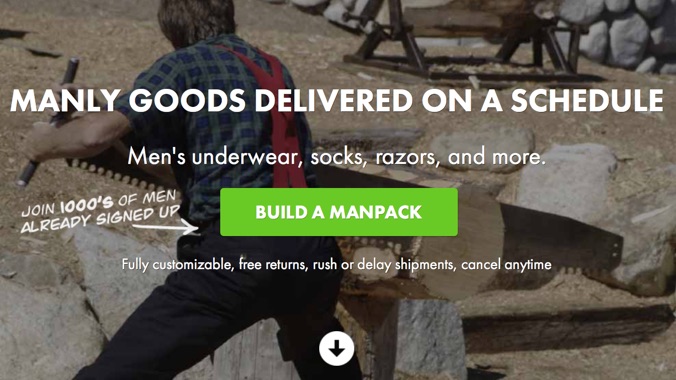
This landing page from Manpacks is fantastic and hilarious. It has a header with a clear benefit, in this case convenience on men's essentials. Then the subhead explains exactly what Manpacks offers. By the time the user reaches the CTA button, they already know what they are going to “Get Started” with.


manpacks-homepage-march-2016


Sqord is a fitness and game tracking wristband for kids. Their landing page isn't bad. It has a coherent color theme that reflects the audience and the product, the button pops, and it gets to the point. The headline is catchy but not very specific, and the subhead only provides a few more surface-level details: “Sqord is your online world, powered by real world play.”


By the time the user reaches the button text “Buy Sqord Membership & Gear” it's hard to know what they're actually buying. Is it the wristband, the app, or both? And why should I care?


sqord-homepage-screenshot


Instill fear of missing out


You always want what you can't have, right? It's all about urgency. Customers hate missing out on a short-term offer. Focus on deadline phrases such as “limited time” or give them and end date. Add exclusivity to your product, when appropriate, with phrases like “while supplies last.” And CTAs that save money will always be a winning tactic. Customers can't ignore it.


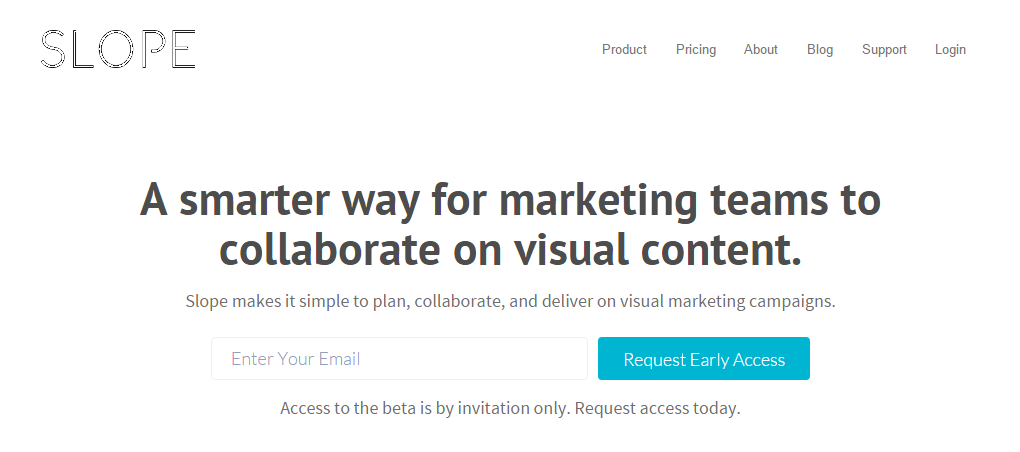
This landing page from Slope, a visual marketing platform, creates FOMO (Fear of Missing Out) by implying only a limited number of people will be allowed access to the beta. In addition to avoiding this negative, the button creates a positive experience of exclusivity. If you're one of the select few who request early access, you'll be part of the inner club–the talk of the town at your next marketers' get-together.


slope-request-early-access-button


Be creative


You'll probably notice a pattern to the successful landing page CTAs mentioned here. They all have a high-benefit header, an explanatory subhead, and a button with active verbs. They all have a coordinated color palette, with the button standing out. They all get right to the point.


Most importantly, they all have some level of creativity. You can read as many prescriptive tips for CTA buttons as possible, but at the end of the day, it's the unexpected element of your page that will give you the edge for higher conversion rates.


About the Author: Aseem Badshah, Founder and CEO of Socedo. Socedo helps sales and marketing professionals leverage social media data to discover, qualify, and nurture leads, automatically.


April Fools' Day 2016: Google gets the ball rolling with Flick keyboard, Gmail mic drop & more

Google wasted no time getting into the April Fools' Day spirit, making a number of fake announcements before the day even started.


Please visit Marketing Land for the full article.


Value Focus: Which aspect(s) of your product should your marketing emphasize?


As a MarketingExperiments blog reader, I can already assume a few things about you. You're an evidence-based marketer. You are an effective communicator. You have an exceptional understanding of marketing. You are skilled at analyzing campaign effectiveness. And you have experience in a wide range of marketing disciplines.


But if you were pitching yourself at a job fair, and could emphasize only one of these elements about yourself, which would it be?


Savvy marketer that you are, I'm guessing you would first size up the company you're applying to - ask questions of the recruiter, take a look at the booth and read some of the literature - before deciding what value to highlight when presenting yourself.


The way you approach marketing your products and services should be no different.


Don't bury the lead


Almost every product or service has several ways it benefits customers. Your challenge is to determine the value focus - which element of value will you lead with in your marketing.


You may highlight more than one element of value as secondary benefits on your website, in your print ads and in your email marketing. However, there likely is a place within your marketing where you have to choose what the primary value focus should be - the headline of your print ad, the hero space on your homepage or, perhaps, the entirety of an email.


Let me give you an example from my own customer journey.


Connect with customer motivation


I recently purchased a Nissan LEAF. In looking at other cars compared to the LEAF, the car I chose offered many elements of value that Nissan highlights on its website:


  • Save money when you use the car - The car is 100% electric, so, as Nissan's site says, you will “Never Pay For Gas Again. #KickGas” Another benefit is lower maintenance costs since it doesn't need oil changes, belts, etc.


  • Nerd out - The car has a certain appeal to early adopters, just because it is electric. Plus, you can access several features (like turning the A/C on to have the car cool down before you get in it) from an app or through a portal on a website using something called telematics. It also has one of those wireless keys that you keep in your pocket when you start the car. Nifty. One headline on Nissan's microsite for the LEAF is “High-Tech. Low-Impact.”


  • 100% fun - This is from a Nissan tagline: “100% electric. 100% fun.” This is kind of hard to quantify since some people will have fun driving a 4×4 pickup truck through a muddy field, which is a very different experience than what the LEAF offers. But I do find the car fun to drive, almost like driving an iPhone.


  • Save the planet - Since it runs on electricity, the car does not pollute directly. In fact, Nissan stamps “Zero Emission” right on the side of the car.

    Photo: RACC


  • Performance - Some carmakers sell their cars by screaming about a HEMI or horsepower or overhead cams. Nissan promotes “100% torque, 100% fun.” Because it's an electric car, the engine doesn't have to rev and shift gears to accelerate. It has instant torque. Now I'm not a car guy, so I don't really understand or care about what that means. But for driving on the highway, acceleration is important. And for a small car, it does accelerate quickly.


  • Safety - Again, it's a smaller car, so safety could be a concern. It does have airbags all over the place - popping out of seats and the roof. Though this would seem to be an important issue to car buyers, I didn't see any prominent mention of safety on Nissan's microsite for the LEAF. 


These are just a few of the possible value elements that popped into my head. I'm sure there are many more.


When I was at the car lot, the salesman was able to size me up, ask me a few questions and determine my motivation. This meant he could easily pivot from one value focus to the other based on my responses.


Nissan has a bigger challenge on its microsite for the LEAF. Which points should it emphasize most prominently?


The path Nissan has taken at the top of its microsite is not to include a value focus at all. In fact, there isn't even really a headline.


The closest thing to a headline is “2016 Nissan LEAF®.” This does serve to orient the visitor that they are on the right page, but it doesn't present any value.


The other two major emphasized elements do not focus on the value either. Rather, before presenting value, the LEAF microsite communicates the cost (in this case, the starting price of its base S model) and an anxiety reducer (in this case, range anxiety, by highlighting how far the car can drive).


Below the fold, the microsite starts communicating value with a rotating animation of six banners (what used to be known as a Flash banner) listing different elements of value.


Simply put, Nissan has not chosen a value focus for the LEAF on this microsite. (This is not unique to the LEAF for Nissan; this microsite is a template it uses for all of its car models.)


Now, one could make the argument that visitors to this microsite are already so motivated that they don't need any value communication and their bigger concerns are price and range anxiety.


However, even if they are already motivated, you should reinforce that value once they hit the site. After all, a car purchase is a major decision, and you want to keep driving them up the funnel. It's also a way to let them know the LEAF is the car for them. “Hey, we understand you. You're among friends.”


Also, there are likely many less motivated car buyers who are just kicking the tires on several cars, and thus visiting many car sites. By leading with value (and the right value focus), you have the opportunity to turn those few moments of interest into deeper research about the vehicle you're selling.


If we take a look at the nearest competitor to the Nissan LEAF - the Tesla Model S - we can see that its landing page does lead with value. (It might be a stretch to consider these two models competitors due to the huge price discrepancy - and therefore, possibly differing motivations of its buyers - but they are the two best-selling all-electric cars in the U.S. and comprise 58% of all pure electric cars sold in the United States in 2015.)


Like the LEAF's page, the headline is pure orientation - “Model S” - however, the copy below focuses on value such as “Highest Safety Rating in America” and “Autopilot with Autosteer and Summon.”


How to determine your product's value focus for your marketing


We've discussed how it's important to communicate value in your marketing. But how do you determine what the value focus should be? Here is a simple process to get you started:


Step #1. Understand the product


Effective marketing merely clarifies the value inherent in the product, so begin with the product itself. What elements of value does it provide to customers? If you weren't involved with the product creation, talk to product developers, business analysts or business leaders who were. Then read professional ratings and customer reviews of your product to get an outside perspective on how well the product delivers on that intended value.


Step #2. Determine the persona


As I said above, there are many reasons to love a LEAF. If I were running a print ad about the car in “Organic Life” magazine, I would focus on the zero emissions and environmental/sustainability aspect. However, if I were writing an ad for “WIRED” magazine, I would focus on the techie/early adopter aspect. Your products likely has more than one customer segment. Before creating the messaging for a specific customer touchpoint, determine which segment or segments you will be communicating with.


Step #3. Ask the customer


Interview current and previous customers. Those who didn't buy. And those who are just in the segment you're targeting who may not even know about your product. Participate in forums and LinkedIn Groups that are popular with different customer segments. Talk to customer service, sales and other customer-facing positions in your organization. Read the magazines, blogs and Tumblrs that your ideal customers read, listen to their podcasts, and monitor their communication on social networks. Conduct focus groups. These are just some examples of ways you can ask customers what element of value most resonate with them.


Step #4. Test


The customer is always right. But the customer doesn't always know what he wants. So it's not enough to just ask your customers about value. This data simply helps you create hypotheses to test with real-world customers to see which value focuses generate the best response. Test value focus in your email. Test in your PPC ads. Identify elements of value that could be the most compelling value focus, and then run follow-up tests throughout the customer journey to discover how to best message that value focus.


You can follow Daniel Burstein, Director of Editorial Content, MECLABS Institute, @DanielBurstein.


You might also like


3 steps for laying your value prop testing groundwork


How to use social media to help discover why customers buy from you


Value Proposition Development  [Online course from MECLABS Institute]


[eBook] Influencer Engagement: 15 Ways to Fail & 25 Ways to WIN

Influencer Engagement - 15 fails and 25 wins


Schadenfreude (n.): Pleasure derived by someone from another person's misfortune.


Who doesn't like watching a good fail? As long as the subject isn't seriously injured, we can all enjoy a hearty laugh at the guy who slips on the banana peel, the woman who gets her shoe caught in a grate, or the kid getting bopped by the family cat. Even if you're the one who fails, you know eventually it will be a funny story you can tell at parties.


While these minor pratfalls are all in good fun, failing at influencer engagement isn't as entertaining. Instead of a few bruises and an amusing anecdote, an influencer outreach fail can end your campaign before it starts. And there are far more ways to fail than you might imagine.


But you don't have to be a cautionary tale. There are more ways to win at influencer engagement than there are banana peels in your way. At TopRank Marketing, we create and manage influencer marketing programs for  some of today's top B2B and B2C brands. We made the mistakes so you don't have to. Over time, we have built a solid strategy for building lasting, mutually beneficial relationships with influencers.


To help you avoid being the object of other marketers' schadenfreude, we created a new eBook, 15 Ways to Fail & 25 Ways to Win with Influencer Engagement. We asked some of our favorite marketing influencers how people have failed to build relationships with them in the past, then added advice based on our years of experience.


The result is a first-hand account of how to succeed in influencer marketing, with insight from both influencers and the marketers who excel at creating relationships with them.


influencer-fail-win-experts


Here are a few ways marketers failed to engage our influencers:


Reaching out cold: “I get requests from people I know really well every week. What makes you think I'll make time to work with you if I've never interacted with you before? Take some time to comment on my posts, rate my podcast, review my book. I'll return the favor in a heartbeat.” Andrew Davis, Founder, Monumental Shift Click to Tweet


Inappropriate asks: “As in asks for promoting your product (books, webinars, conferences, etc.) in exchange for affiliate revenue: Please DON'T.” Carlos Gil, Head of Global Social Media, BMC Software Click to Tweet


Asking too soon: “My pet peeve is when someone follows me on Twitter or Instagram and/or fans me on Facebook and immediately reaches out to me with a request to check out their business.” Kim Garst, Bestselling Author and Keynote Speaker Click to Tweet


Using the wrong communication channels: “Sending me a message about LinkedIn using Facebook.” Jason Miller, Group manager, Content Marketing & Social Media, LinkedIn Click to Tweet


Impersonal pitches: “When companies send out generic en masse pitches, like a robo-call, but via email. The personal touch can make or break an influencer's decision to engage.” Chad Pollitt, Co-Founder & VP of Audience, Relevance Click to Tweet


Lack of credibility: “Competition for effective influencers' time is high, so reaching out using a Gmail address and pointing to a little known brand hosted on a hyphenated domain with poor design isn't going to motivate anyone to engage.” Lee Odden, CEO, TopRank Marketing Click to Tweet


Lazy duplicated messages: “When you get that really interesting Tweet inviting you to take a look at something and then when you click through to it you also see that they have composed basically the same message to 579 other people on Twitter.” Jon Jantsch, Founder, Duct Tape Marketing Click to Tweet


Delegated, impersonal outreach: “Reach out to me directly yourself. Do NOT delegate this critical step to your marketing agency, PR professional, team member, assistant or intern. Do it yourself and make your note personal. If you want me to respond, I expect you to do the asking yourself.” Heidi Cohen, Chief Content Officer, Actionable Marketing Guide Click to Tweet


Asking without giving first: “Not greasing the skids. Influencers are most likely to add commentary if there is some kind of existing relationship. This means at least some kind of history where the person reaching out has already been sharing the influencer content.” Joe Pulizzi, Founder, Content Marketing Institute Click to Tweet


Being too salesy: “Asking for 30 minutes of my time to discuss a “partnership” – which actually means you want me to sell your stuff to my clients.” Ardath Albee, CEO & B2B Marketing Strategist, Marketing Interactions Click to Tweet


Asking them to sell for you: “Your influencer is there to help you increase the awareness, association and consideration of your brand in a certain space – not to shill for you.” Gerry Moran, Global Head of Social Media, Cognizant  Click to Tweet


Too much focus on the brand: “Don't tell me your story, let me tell my story. 'LESS fabrication, MORE facilitation' = a boost to your Return on Relationship, #RonR” Ted Rubin, Social Marketing Strategist, Evangelist & Acting CMO, The Rubin Organization Click to Tweet


Placing too many demands on the influencer: “Set the tone and rules upfront. Influencers can't be expected to take part in everything you do, so say that. Set the ground rules and expectations.” Bryan Kramer, President & CEO, PureMatter Brand Marketing & Interactive Click to Tweet


Spamming with automated messages: “Signing up for an app that spams your “top influencer” with automated messages is a sure path to a rocky relationship.” Glen Gilmore, Principal, Gilmore Business Network Click to Tweet


Failure to follow up: “Not following up with that blog post, eBook, or copy of the interview the influencer contributed to. Influencers are indeed interested in seeing the fruits of their labors.” Rebecca Lieb, Principal, Conglomotron LLC Click to Tweet


If you have a few scrapes and bruises from your past influencer marketing attempts, it's time to be an example instead of a cautionary tale. Check out the SlideShare below for the tips you need to start winning:


Take these tips with you wherever you go: Download your copy of 15 Ways to fail & 25 Ways to Win with Influencer Engagement.


Learn Even More Influencer Marketing Wins at Social Media Marketing World


On April 19th, TopRank Marketing CEO Lee Odden will be presenting the “Influencer Marketing Playbook: How to Identify, Qualify & Recruit Effective Influencers” at Social Media Marketing World in San Diego. If you like what you saw here and want to learn even more from one of the top authorities on influencer marketing, be sure to check out Lee's session details.


Disclosure: LinkedIn Marketing is a TopRank Marketing client. 


Email Newsletter
Gain a competitive advantage by subscribing to the
TopRank® Online Marketing Newsletter.


© Online Marketing Blog - TopRank®, 2016. |
[eBook] Influencer Engagement: 15 Ways to Fail & 25 Ways to WIN | http://www.toprankblog.com

The post [eBook] Influencer Engagement: 15 Ways to Fail & 25 Ways to WIN appeared first on Online Marketing Blog - TopRank®.