Monday, June 27, 2016

3 SEO-Changing RankBrain Tips Marketers Can't Ignore

SEO-RankBrain-Tips


The way that marketers think about, talk about and implement SEO is constantly evolving. Blackhat SEO tactics that once were incredibly successful, no longer garner the results that they once did. Both search engines and online audiences have become much more sophisticated, forcing marketers to ditch the slimy SEO tactics and focus instead on providing real value.


According to TNW News, 47% of digital marketers name SEO as one of their most effective tactics, but 39% also identify it as one of the most difficult.


To help ease the pain, I attended a presentation last week by WordStream's Larry Kim that shone a light on why the traditional workflow of which includes inserting keywords in the “right” places needs to change. The presentation included what Google's RankBrain actually is and why it matters, but the bulk of the talk dug into how to change focus in the face of algorithm changes like RankBrain and why exact term usage needs to be less of a focus moving forward. Read on to get 3 tips on where to focus your SEO efforts instead.


What is RankBrain?


Larry stated that “it doesn't matter if RankBrain is an addition to the algorithm or an alteration. What matters is whether the change effects what content ranks”. In the case of RankBrain, this change certainly does matter.


RankBrain enables the interpretation of meaning. The interpretation of the meaning behind keyword searches and the interpretation of the meaning behind language used in meta, on-page, and site-wide. Beyond this, RankBrain learns about what content (and what types of content) appeals to specific search audiences in order to provide more useful, relevant search results.


Why Does it Matter?


Google being able to interpret the meaning of language used online makes a big difference. It means it's easier to get your content indexed for relevant keywords, as long as that content is relevant to the search intent behind the keyword. It means inserting keywords isn't a priority anymore – exact keyword usage does not make it easier to become indexed.


So, if we're already indexed for the keywords we want to rank for, how do we rank? Here's 3 tips from Larry Kim on how to switch focus away from keyword usage and indexation, and toward tactics that take advantage of the sophisticated qualities of RankBrain and how it measures and scores content quality to determine rank position.


Tip #1: Stop Inserting Keywords into Your Meta Titles


There is a negative correlation between exact keyword inclusions and CTR. High performing meta titles (above the average click-through rate at the given position) actually tend to not include the exact keyword. This is because RankBrain enables interpretation of the meaning behind language: interpretation of both the language used in the keyword search, along with the language used on-page and in meta.


Don't Forget: align your meta message to speak to the intent of the search audience you're targeting in order to encourage searchers to click your result. Inserting keywords is not important, and can actually be a disadvantage.


Tip #2: Remember What Actually Impacts CTR


So, you might be wondering: if I'm not supposed to insert keywords into my meta title, what am I supposed to do what it? Great question, here is some:


Use Emotional Triggers


Write headlines to an emotional persona based on basic emotional triggers: anger, urgency, fear, sadness, etc. By appealing to the emotions of your audience in a unique, catchy way, you can encourage them to click on your meta title for more.


Test with Paid


The best way to test your meta click-ability is to use AdWords to test 10 different headlines for different emotional personas. It's a quick-and-easy 2 step process:


  • Step 1: Use broad match keywords to represent the variety of exact keywords that relate to the search audience you wish to reach

  • Step 2: Replace old headlines with the winner


Be Memorable, Become Familiar


Another important factor to consider is how “non-SEO” tactics actually make a huge impact on CTR from the SERP by creating a familiarity bias. Stated simply, this bias goes like this: if you're familiar with a brand before you search, you're more likely to click on their result. I'll break down his advice into 2 steps to create brand familiarity in order to dramatically improve organic CTR:


  • Step 1: create familiarity with the brand by drawing people in with memorable, useful content that doesn't try to sell anything.

  • Step 2: Ensure subsequent searches go your way by remarketing your most memorable content.


Tip #3: Focus on Engagement


Bounce Rate


Another highly impactful factor to rank is bounce rate. There are correlations that we see in nature that are non-causal, and there are correlations we see with algorithm inclusions. The correlation between bounce rate and rank looks very algorithmic. That being said, bounce rate is the #1 indicator that searchers aren't liking your content. Focusing on providing additional useful links to more content is a great way to reduce bounce rate and start sending positive signals to Google about the quality of your content.


Dwell Time (bounce + time spent)


The metrics Google uses to determine whether or not content is satisfying searchers are also important. Some of these metrics are not accessible to marketers with Google Analytics. An example of this is dwell time. This is the time between when searchers enter the page from the SERP and how long they dwell on the page before bouncing back to the SERP. The advice Larry gave for leveraging this information is to use the combination of time spent on page and bounce rate to determine how well the page is measuring up against Google's dwell time metric.


Conversion Rates


Conversion rate implies content appeal too, of course. Larry's tip: change your offer dramatically to increase conversion rate if you're not finding success. Honing your focus on conversion rate optimization isn't just great for appealing to your audience at the bottom of the funnel, it's great for attracting customers through search visibility across the entire funnel as well.


Poor Performing Content


If you can't fix it, delete it. If you have consistently poor performing content, you should “delete your bad neighborhoods”. This is because studies that look at the relevance of domain authority vs page authority for determining rank strong suggest a domain-level engagement “score”, as well as a page-level engagement “score”. If you have content that performs badly and doesn't provide value to users, this is content that will only negatively impact what your content quality looks like at the domain level.


Key Take-Away: New Rank Factors to Replace the Focus on Keyword Usage


Larry talked a lot about CTR from the SERP in his presentation. He brought up an important question: what came first, rank or CTR? The answer is they are reciprocal. Where top rank position impacts CTR, CTR also is measured and plays a part in determining rank position. But the reason he makes this point is to demonstrate that Google is measuring what implies searcher satisfaction. CTR is just one of these measurements. Once content is indexed, CTR is not the only thing that represents content quality. How searchers behave and engage with content after they enter a website from the SERP plays a huge role in the checks and balances of identifying truly useful content for searchers.


So if you're going to remember one thing about RankBrain: it's easy to get indexed, but make sure you're appealing to the search audience and their intent from SERP to site.


Email Newsletter
Gain a competitive advantage by subscribing to the
TopRank® Online Marketing Newsletter.


© Online Marketing Blog - TopRank®, 2016. |
3 SEO-Changing RankBrain Tips Marketers Can't Ignore | http://www.toprankblog.com

The post 3 SEO-Changing RankBrain Tips Marketers Can't Ignore appeared first on Online Marketing Blog - TopRank®.


Which Lead Generation Tactics Get the Best Results?

When it comes to lead generation, quality matters over quantity. But by the same token, people don't like being sold to and they resent the notion that they're simply “numbers in a database somewhere”. With that in mind, Ascend2 conducted research on the most effective tactics for both lead generation and lead nurturing. What they found out may surprise you.


Which Strategies Were Most Effective?


most-effective-lead-gen


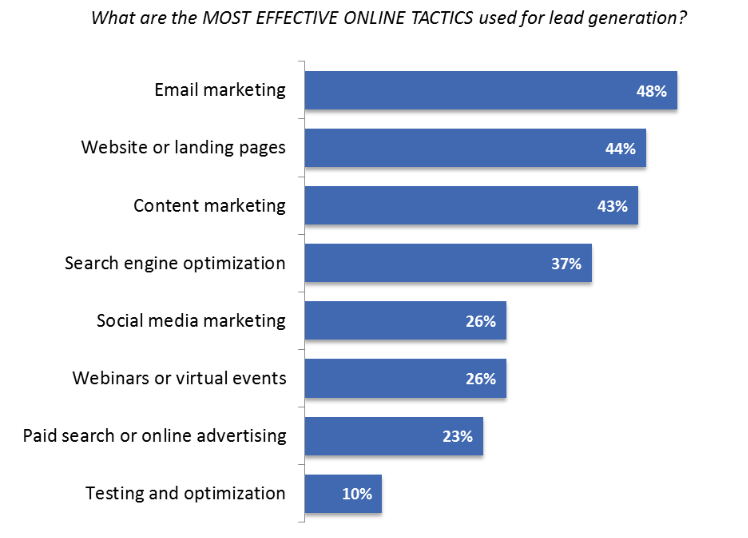
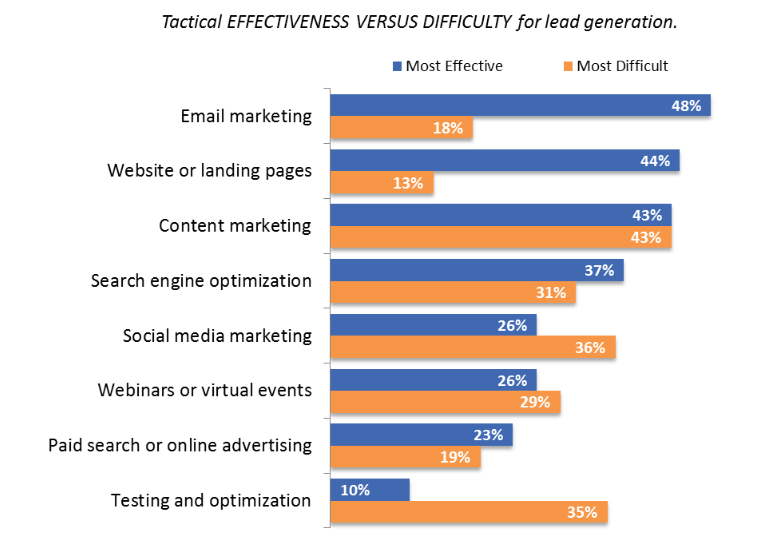
Email marketing is still king of the hill when it comes to lead generation effectiveness


It may come as no surprise, but for sheer ease of implementation and effectiveness of results, nothing beats good, old-fashioned email marketing. Websites and landing pages are close behind, with content marketing making noticeable gains. It's also worth noting that the survey shows email marketing as one of the easiest tactics to implement.


lead-gen-difficulty


Email marketing is one of the easiest tactics to launch


But notice the relative difficulty of other measures such as content marketing. Sure, it gets decent results, but at what cost? Effectiveness and difficulty are tied. Keep in mind, email marketing has been around much longer, and therefore we've had much more time to experiment and learn how to interact with prospects. Huge strides are being made in creating new tools that make content marketing more relevant and personable, but we're still in the collective crawling stages with it.


And while we're on that topic, take a look at testing and optimization. Low effectiveness, relatively high difficulty. Surprised? Don't be. That's because testing and optimization isn't a lead generation strategy in and of itself – it's something you do with the other strategies.


So now we know that email marketing is both one of the best converting and most cost effective measures – what next? Before you load up and catapult a bunch of messages to your prospects' inboxes, remember that you need to nurture the leads you've gotten into your funnel at this point. Fortunately, Ascend2 also looked at the most promising lead nurturing strategies and what trends were getting the kinds of results their teams had hoped for.


Lead Nurturing Goals


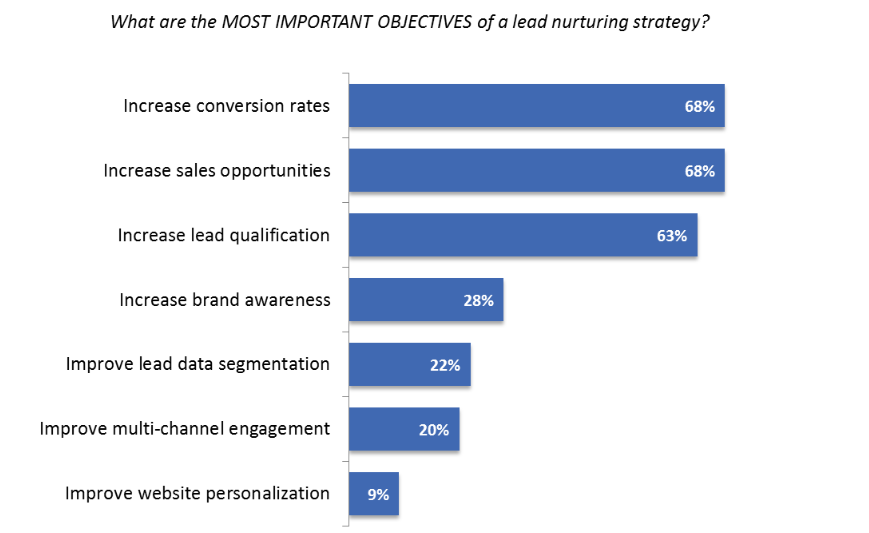
When asked the question about the most important objectives of a lead nurturing campaign, the answers were varied. Most responded as you might imagine – to increase conversion rates or open up more sales opportunities.


lead-nurturing-goals


Right behind these two responses was a surprising answer thrown into the mix – “lead qualification”. This idea namely revolves around ensuring that a lead is best poised to make a decision and convert. This means understanding the difference between “interest” and “intent” – many people are interested in something, but far fewer have an active intent at that point to purchase. As of yet, there are no tools which can seamlessly predict this kind of action, although there are many ways to go through the process. No matter what, it's still a heavy burden on the sales team to discern who's ready to act and who's just a well-meaning enthusiast.


So when it comes to nurturing leads, which strategy came out on top? Here again, email marketing:


lead-nurturing


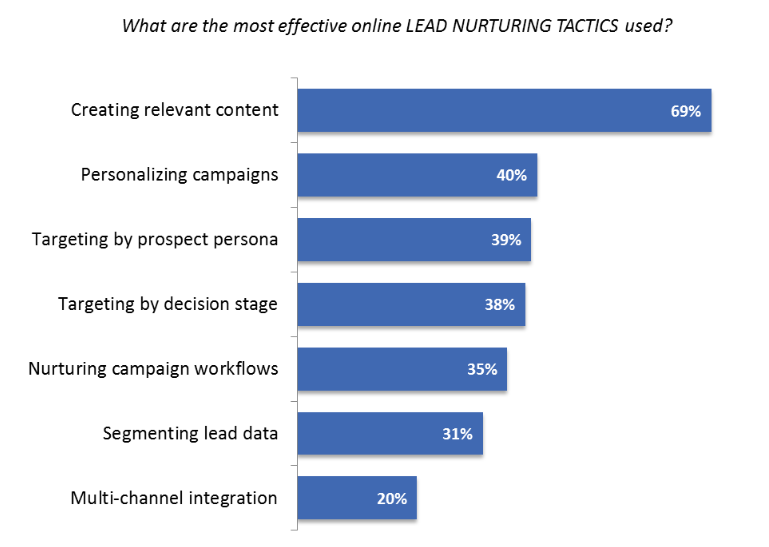
But what, specifically is it about email that people respond to? As it turns out, the best effects on lead nurturing come from creating relevant content:


lead-nurturing-effective-tactics


But notice the other points below these – points which have far fewer reported success rates:


  • Campaign personalization

  • Targeting by persona

  • Targeting by stage in the decision-making process


These are all the very things that email marketing excels at! You can use your CRM data to segment leads based on the persona they most closely match, as well as what stage they're in when it comes to making a decision. You can personalize your campaign with all the relevant details in the world, but prospects still won't bite.


The Crossroads of Relevance and Relate-ability


So far, marketing has tried to create the appearance of relevance in campaigns. We try to do this by personalizing emails to give the prospect more of a sense of “me-to-you” communication. We try to align them with personas like theirs in an attempt to get inside their minds and find out what motivates them to purchase. We look at how close they might be to making a decision and we market accordingly.


The fact is, marketers are both swift and smart in using technology to automate much of their follow-up and nurturing tasks. The problem however is that people know it. They know you're just filling in blanks in a software program or trying to put them into neat boxes based on a few scraps of information that you've gleaned from them.


Of course that begs the question, “How are we supposed to create relevant content when people won't tell us anything about themselves?” They will – you simply have to ask. When was the last time you connected with a prospect and really meant it when you said, “how can we help you?” We're so conditioned to answer that we're “just looking” for fear of being sold to.


Creating Better Communication


Maybe the better question is, “what's challenging or frustrating you? What can I help solve for you?” If a prospect knows that you can relate to them personally, they'll be much more open to sharing with you. And while it's not currently possible to write content that appeals to everyone at every moment, it is possible to open up communication and get suggestions for new content, while acknowledging the source.


The bottom line whether you're looking to attract more leads or help grow the leads you have is shifting your approach from pure sales and marketing to problem solving. Email is a prospect's open invitation to get as close to them as you possibly can. It's something they can access anytime, anywhere. And it's the best shot you're going to have at learning about their unique issue and demonstrating precisely how your product or service solves it. Not in a high-pressure, hype-filled way, but in a friendly, open, personal way.


We have all the right tools and processes – we just need to add in the human factor.


What are your thoughts on using email marketing for lead generation and nurturing? Have you found in your own experience that other tactics work better? Do you think we should spend less time automating and more time communicating? Share your thoughts and perspectives with us in the comments below.


About the Author: Sherice Jacob helps business owners improve website design and increase conversion rates through compelling copywriting, user-friendly design and smart analytics analysis. Learn more at iElectrify.com and download your free web copy tune-up and conversion checklist today! Follow @sherice on Twitter, LinkedIn or Google+ for more articles like this!


Sunday, June 26, 2016

We Are All Foreigners

Harold Graduates The recent vote for Britain to depart the European Union came with a tall side order of hate, racism, and fear. Your first reaction will probably mirror mine: deplorable. And it is. But there's more to it.

Hate Comes From Fear


This kind of hate, anyway, is the stuff of fear. The people most affected by any economic or political changes are those who are struggling to survive. No matter what the change is, it hits those who are the least stable in their lives and situations. When you see lots and lots of reports of people in Britain shouting “Go back to Poland,” my guess is that it comes from people who aren't getting enough to eat, or who have to decide whether to pay for medicine or heat.

Continue Reading

The post We Are All Foreigners appeared first on chrisbrogan.com.


Weekend Favs June Twenty-Five

Weekend Favs June Twenty-Five written by John Jantsch read more at Duct Tape Marketing


My weekend blog post routine includes posting links to a handful of tools or great content I ran across during the week.


I don't go into depth about the finds, but encourage you to check them out if they sound interesting. The photo in the post is a favorite for the week from online source or one that I took out there on the road.


Beach.


Good stuff I found this week:


Stencil – Ridiculously simple image creation for social media marketers, bloggers and small businesses


LinkedIn ProFinder – A new professional services marketplace from LinkedIn that will help you find the best local freelance professionals


Lead Flows – All-in-one conversion pop-up from Leadin that will drive conversions, gather insights, and target site visitors – for free


Friday, June 24, 2016

23 Must-Have Tools for Your Marketing Stack

It's time to upgrade your SaaS marketing team.


With the right tools, your staff has the opportunity to acquire new users, offer quality customer service, and boost retention rates.


However, some businesses shy away from experimenting with new tools.


“New technology can be scary, and you don't want to struggle with a tool that has a steep learning curve. Unfortunately, this means companies are missing out on some great products that can make life and business so much easier,” writes Travis Wright, chief marketing technologist at CCP Global.


The key is to create a marketing stack that fits your SaaS's needs, not the latest trends. Moreover, don't feel obligated to have a tool for every function of your business. Only try a tool when you think it can solve a problem or make your team more efficient.


Here are 23 tools to consider for your marketing stack.


Customer Support


Research reveals that “76% of consumers look at customer service as a test of their value to a brand.” Give your users value by answering their questions through customer support.


1. HappyFox


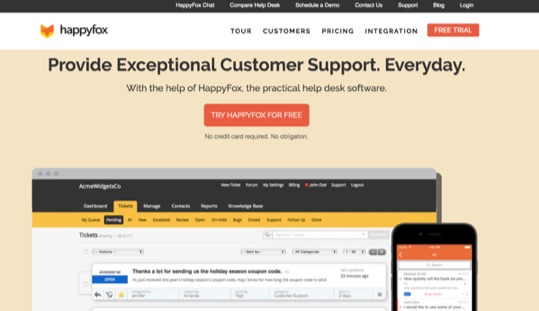
HappyFox handles all inbound requests in one ticketing system. And your service reps can contact multiple people from the same organization about a resolution. Unlike the some other help desk companies, you receive a secure help desk with SSL integration and 24/7 support at no extra cost.


happyfox-homepage-2016


2. Freshdesk


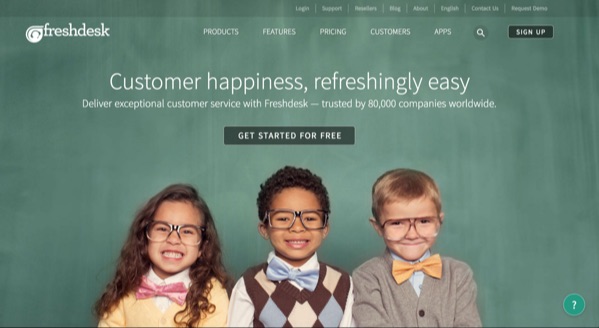
Freshdesk's shared inbox lets your team collaborate and resolve issues together. You also can set requirements for resolution times.


freshdesk-homepage-2016


Onboarding


Onboarding customers is vital to ensure people understand and use your product effectively. This process is a way to not only familiarize consumers with your app, but also to formally introduce them to your brand.


Kate Griggs, product owner at InterContinental Hotels Group, says, “User onboarding is one of the most crucial–and frustrating–elements of any product launch. It is the first impression, and it needs to be planned and analyzed for future adoption and growth.”


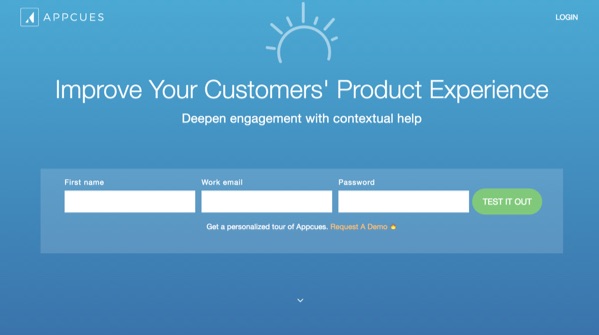
3. Appcues


Appcues enables you to build a personalized user onboarding experience. With targeting capabilities, you can show the right experience to the right user at the right time. It's highly recommended because non-developers can run experiments and improve your activation strategy.


appcues-homepage-2016


4. WalkMe


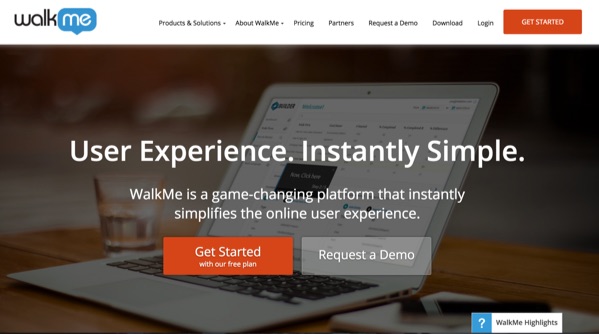
WalkMe gives you the control to change content, design, placement, and functionality of each step of the on-screen guidance. Its featured text option draws the user's attention to important announcements.


walkme-homepage-2016


Social Media


People are constantly sharing information online. And right now, there are 2.3 billion active social media users. Your SaaS brand can learn what your customers are saying and can engage directly with social media.


5. Snapchat


Snapchat gives brands the chance to interact with customers. Boost brand awareness with short video clips. Moreover, the platform is America's second-favorite social network. That opens the doors to introduce your product to more interested buyers.


snapchat-homepage-2016


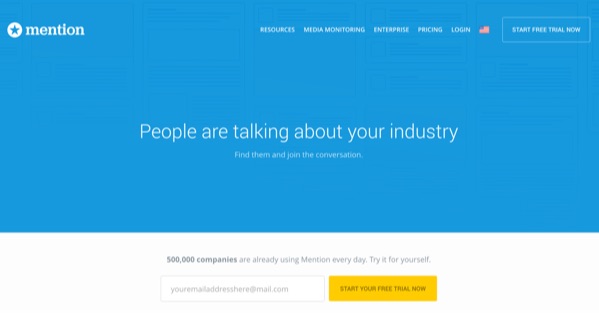
6. Mention


Mention monitors conversations about your brand. Also, identify influencers and subject matter experts in your industry.


mention-homepage-2016


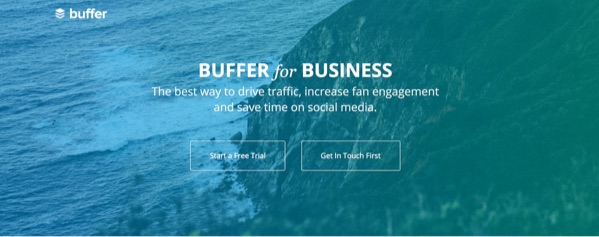
7. Buffer


Buffer helps drive more clicks on your posts and traffic to your site. The publishing tool lets you share content across multiple social networks.


Simplicity is the best word to describe Buffer. They offer simple analytics, making it easy to see your best performing social messages.


buffer-for-business-2016


Analytics


Your SaaS can benefit from gathering qualitative and quantitative data from your website. It moves your team to create a worthwhile online experience for your customers.


“When you are armed with this knowledge, you get to see how effective your website is and what changes you need to make in order to make it even better,” writes John Jantsch, founder of Duct Tape Marketing Consultant.


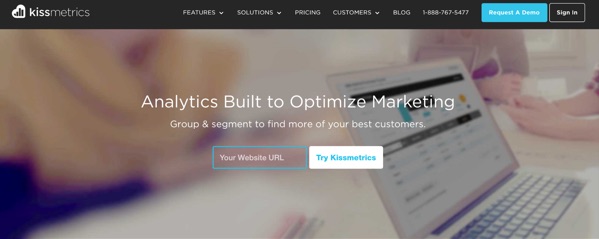
8. Kissmetrics


Kissmetrics tracks individual and group visitor behavior. You'll collect data from their first anonymous visit to their lifetime value.


kissmetrics-homepage-early-2016


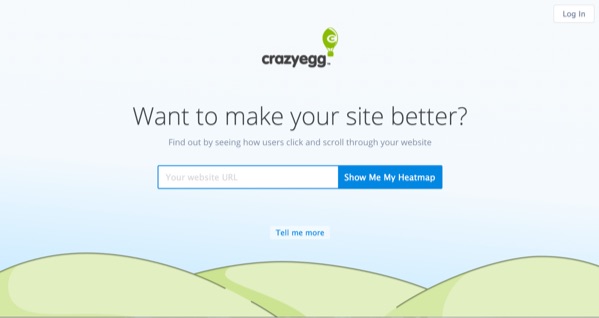
9. Crazy Egg


Crazy Egg lets your team see exactly what visitors are doing on your website. For example, you'll discover where people are clicking and where they stop scrolling on the page. Their Confetti Tool is really useful. It distinguishes your clicks, segmenting them by referral sources and search terms.


crazy-egg-homepage-2016


SEO


Make it easy for your customers to find you. Work with your team to generate visits to your site. If search engines can't find you, then your ideal customers can't either.


“…[B]usinesses are normally somewhat reluctant to get involved with SEO in the first place, and want to start small, with the basics due to budgetary concerns…If you want to see better results, you have to scale upward, in both quality and volume,” writes Forbes contributor Jayson DeMers.


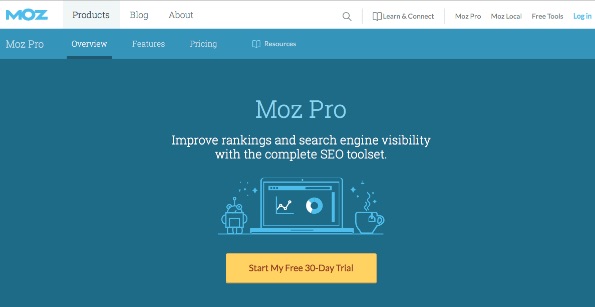
10. Moz Pro


Moz Pro centers around improving your rankings and search engine visibility. And you can compare your mobile vs. desktop rankings.


moz-pro-homepage-2016


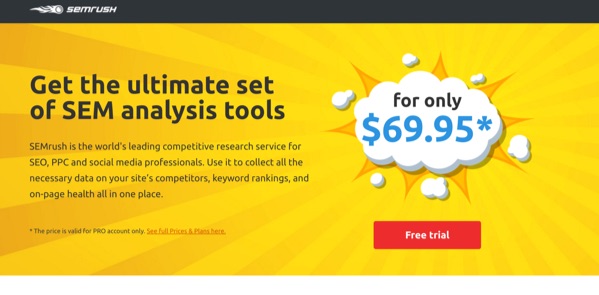
11. SEMrush


SEMrush finds long tail keywords and phrase matches. You also can monitor your competitors' inbound links. And their US keyword database contains more than 80 million keywords!


semrush-homepage-2016


Loyalty


A Forrester study reports that “81% of marketing decision makers place customer loyalty as a top priority for improvement.” Customer expectations for loyalty programs have risen. And consumers desire incentives for their brand loyalty.


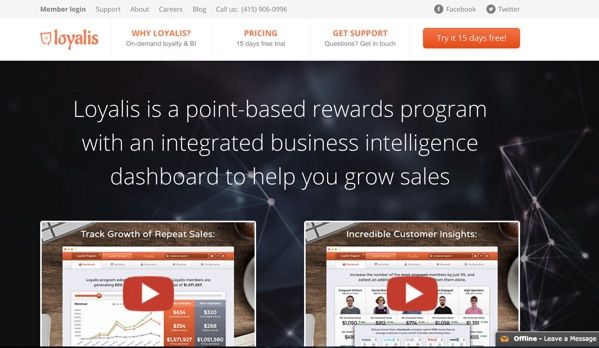
12. Loyalist


Loyalis is a rewards program created to boost your customer retention. You can even entice buyers with points if they share information via social media.


loyalis-homepage-2016


13. Social Annex


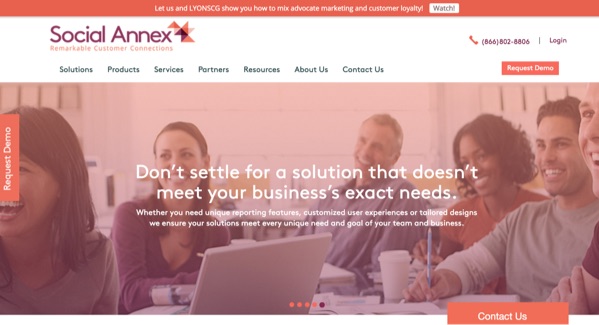
Social Annex helps your team deliver personalized actions. The software makes it easy for your customers to earn points and redeem prizes. Gamification is their signature tool. The platform has components like competition, tiers, and badges to enhance brand engagement.


social-annex-homepage-2016


Email Marketing


Communication is crucial to building quality customer relationships. Email is an effective tool to educate and respond to your consumers.


14. Customer.io


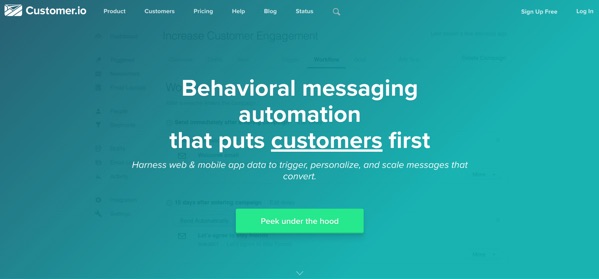
Customer.io helps your team send personalized messages. And connect every message to an action.


customer-io-homepage-2016


15. Vero


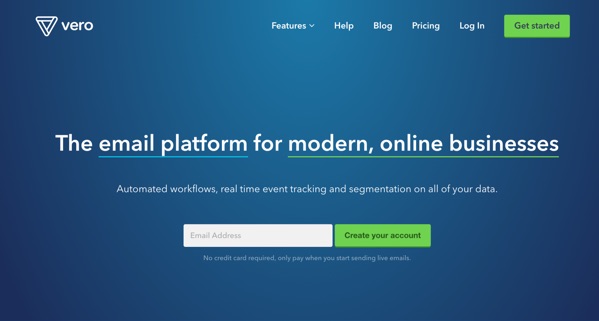
Vero empowers your team to segment users and combine conditions to send targeted campaigns. Sync with your customers' routines and send emails based on time zones.


vero-homepage-2016


Content Marketing


According to Demand Metric, content marketing “costs 62% less than traditional marketing and generates about 3 times as many leads.” Consider integrating content into your marketing strategy.


16. CoSchedule


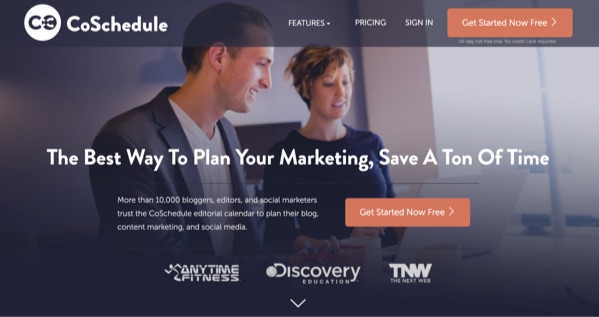
CoSchedule equips you with a drag-and-drop marketing calendar. That way you can plan, publish, and promote without the hassle.


coschedule-homepage-2016


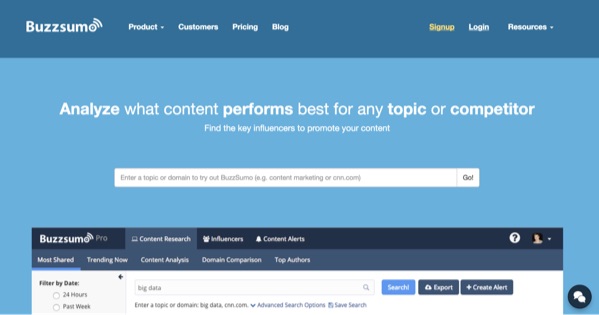
17. Buzzsumo


Buzzsumo uncovers the most shared content across social networks. Receive content alerts regarding keywords, authors, and domains. Their chrome extension places all the necessary information at your fingertips.


buzzsumo-homepage-2016


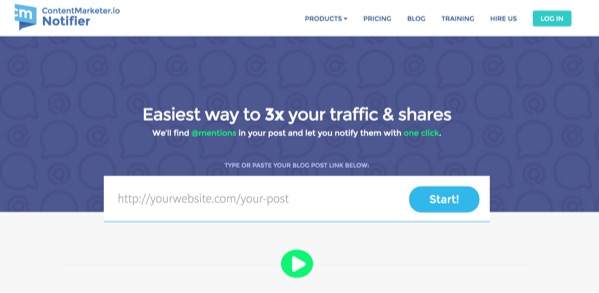
18. Notifier


Notifier scans your blog posts, finds people you mentioned, and then lets you notify them. It's a one-stop shop to bringing awareness to your content.


notifier-homepage-2016


Customer Feedback


Are your customers satisfied? Feedback guides your team's decision-making and influences your customer success roadmap.


“Every business hopes to better its profits. The best way to do so is to serve the customer as fully as possible, especially if you can get each consumer to lead the way. By seeking customer feedback, many businesses gain a clearer picture of ways they can improve,” states Larry Alton, a business and online marketing consultant.


19. Riddle


Riddle gathers deep audience insight. Collect business intelligence through engaging quizzes and polls.


riddle-homepage-2016


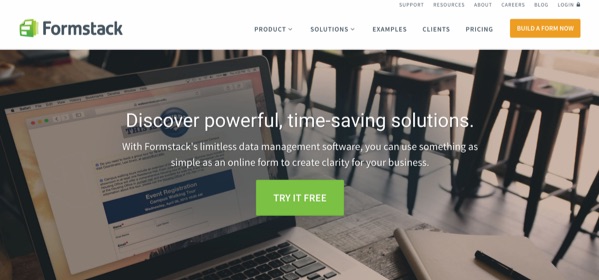
20. Formstack


Formstack makes it possible to compile customer data. With A/B testing, you'll find out which forms convert at higher rates. Their Social Autofill feature lets your users autofill form fields with social profiles.


formstack-homepage-2016


Video


Hubspot reports that “64% of users are more likely to buy a product online after watching a video.” It might benefit your team to create more videos.


21. Animate


With Animoto, gain access to dozens of video styles with unique filters and transitions.


animoto-homepage-2016


22. Wistia


Wistia allows you to restrict where videos are played. Every view generates a heatmap, showing exactly which parts of the video the viewer watched. Also, Wistia thrives on collaboration, share videos and analytics with your team and see their time-coded comments.


wistia-homepage-2016


23. Vimeo


Vimeo enables you to upload and share your videos. They have a free plan and a paid plan that costs as little as $59.95 per year.


vimeo-homepage-2016


Upgrade Your Stack


Useful tools help your team work more efficiently. So, don't be wary about experimenting with different options.


However, be mindful about how a tool can solve your company's challenges. You won't need a tool for everything.


Start exploring. Upgrade your marketing stack.


About the Author: Shayla Price lives at the intersection of digital marketing, technology and social responsibility. Connect with her on Twitter @shaylaprice.